
Temon Hamlet, Purwosari Village, Gunungkidul Regency, Special Region of Yogyakarta, Indonesia.
The karst region of Gunungkidul poses unique challenges for agriculture, particularly in terms of limited water resources. The porous limestone soil means that there are no natural springs or easily accessible groundwater. This situation is exacerbated by climate change, which has resulted in prolonged dry seasons and caused irrigation costs to skyrocket. As a result, many farmers have been forced to abandon their fields, threatening the sustainability of their livelihoods.
The results of the baseline survey on mist irrigation systems in Temon Hamlet, Giripurwo Village, provide an overview of the challenges, needs, and potential in agricultural water management in this area. The survey, which involved 26 respondents, the majority of whom were members of farmer groups whose main occupations were farmers, farm labourers, or livestock farmers, identified major problems such as drought, pest attacks, and limited capital. The limited availability of adequate water resources is also a major obstacle to optimal water management for agriculture.

These challenges have a significant impact on farmers' incomes, especially during the dry season when agricultural activities come to a halt. Therefore, innovative solutions are needed to protect the most vulnerable communities and create greater resilience.

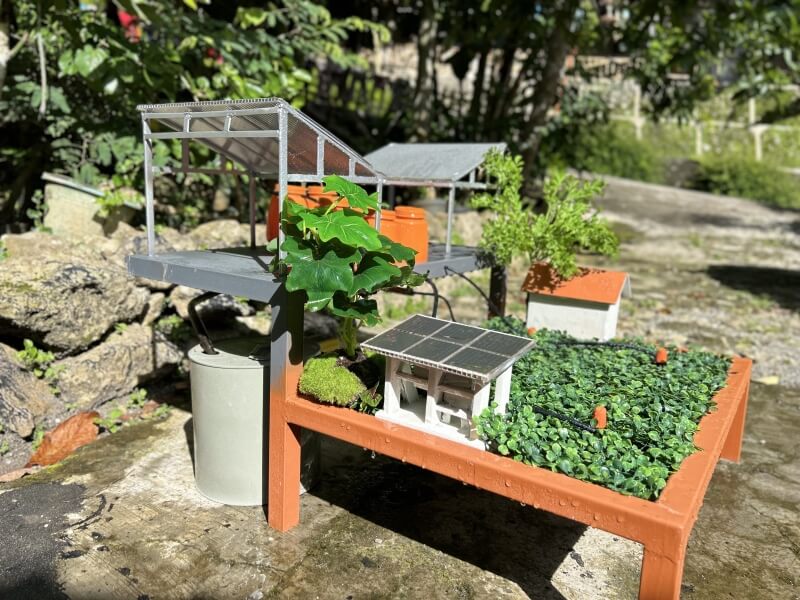
The Smart Fog Irrigation System with Rainwater Harvesting is an innovative technology designed to improve water use efficiency in agriculture, especially in areas with limited water availability. This system works by spraying water in the form of fine particles (fog), which can increase micro-humidity around plants, reduce evaporation, and ensure more even and efficient water distribution. Compared to traditional irrigation methods such as surface or drip irrigation, mist irrigation can save up to 50% of water due to more controlled water usage and minimisation of losses due to surface runoff or excessive infiltration.
In addition, this system is combined with soil moisture sensors and IoT (Internet of Things)-based automation so that watering can be adjusted in real time to the needs of the plants. Another advantage is its ability to improve plant growth quality, especially for horticultural crops such as chillies, tomatoes, and melons that require optimal moisture levels. By utilising renewable energy sources such as solar panels, smart mist irrigation also provides an environmentally friendly and sustainable solution for modern agriculture.


The implementation of this system is highly relevant in arid areas such as Temon Hamlet, Giripurwo Village, Gunung Kidul, where water sources are limited but agricultural potential remains high. Therefore, smart fog irrigation is an effective option for increasing agricultural productivity, reducing water wastage, and helping farmers cope with the challenges of climate change. By reducing dependence on expensive paid water sources and improving water use efficiency, this system not only helps increase agricultural yields but also opens up opportunities for farmers to earn more stable incomes. This innovation is a strategic step towards more sustainable, adaptive, and resilient agricultural practices in the face of environmental change.
———–
Author: Nanda Annisa Husni – Information and Communications Officer