
That morning, just before leaving for work, a troop of long-tailed macaques came and damaged my family’s crops. Perhaps it was the right moment to negotiate and make peace with the monkey I call “the Boss.”
At around 7 a.m., I was getting ready to leave for the Regional Disaster Management Agency (BPBD) office when I heard a “crack... crack...”. I opened the window, and there they were. The Boss and his companions were lined up neatly on the rocks beside my house, showing no signs of leaving.
I immediately called my husband. We tried various ways to chase them away, throwing stones and even setting off firecrackers. Nothing worked. The Boss remained calmly perched near the house, seemingly unbothered by our efforts. He simply watched as I tried to figure out what to do next.
I had already been busy with all sorts of household chores since early morning, and now, just as I was about to leave for work, I had to deal with the Boss again. It seems there is always a new story every morning.
With my never-ending household responsibilities, my mornings are also regularly interrupted by a troop of monkeys that appear from who knows where. They search for food in the trees beside my house, including banana, guava, and papaya trees. Some even drink water from the bucket in our goat pen. They also eat crops such as peanuts and corn, leaving little untouched.
My parents, however, refuse to give up. Even when the monkeys destroy their crops, they keep planting again.
If my parents’ crops were left undamaged, a single harvest could yield several dozen kilograms of corn and peanuts. The produce would be enough for the family’s own consumption, and any surplus could be sold to earn additional income.
However, with the monkeys raiding the fields more frequently, my parents’ harvest now barely provides enough for their own consumption. Whatever they can sell is far less than before. This has had a significant impact on my parents, who rely on the produce from their fields to support their daily needs.
The monkeys do not seem to go very far, either. They keep coming back, disturbing both me and my plants.
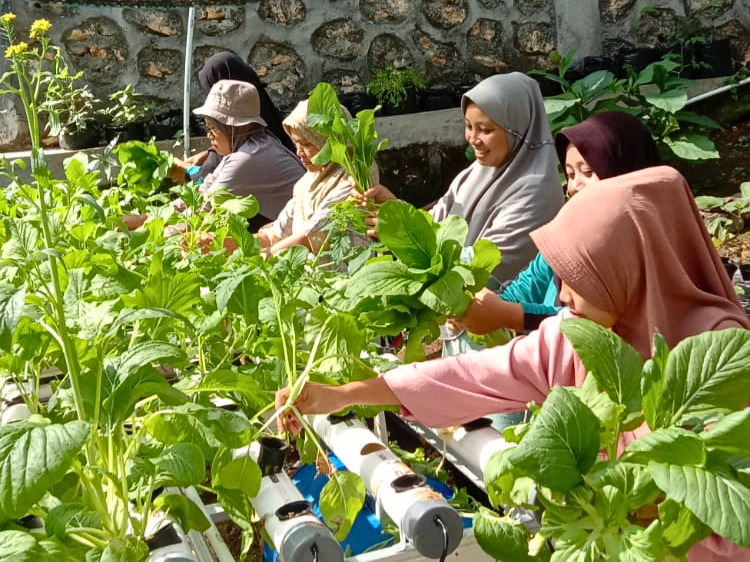
Photo 1. Ratna (the woman wearing a hat on the left) tending to mustard greens with fellow women in the community.
Dealing with Monkeys Requires a Strategy
Eventually, my husband and I came up with an idea. Before leaving that morning, we placed some bananas on the rocks near my house.
The Boss took the bananas and left with them.
That experience taught me that dealing with the Boss requires strategy, not anger.
That morning, I began to realize that not every problem can be solved by trying as hard as possible to drive something away. Sometimes, we need to find a way to minimize the harm and losses for everyone involved.
That was not the first time I had encountered the Boss. Every morning, I am busy taking care of the house, from sweeping the yard and doing the laundry to preparing meals. Lately, several monkeys have been roaming around our house. They usually come from the surrounding trees and search for food in the yard.
At first, I felt frightened and a little worried because the monkeys sometimes ventured onto the porch and took things. Whenever I saw them approaching, I would immediately close the doors and windows to prevent them from entering the house.
Although they can be quite a nuisance, their antics sometimes make me laugh. When I try to chase them away, they simply sit there calmly, eating and looking back at me.
I used to be afraid of them, but now I am gradually getting used to their presence in my daily life. They have almost become uninvited friends who show up whenever they please. No matter how hard we try to chase them away, they do not seem afraid.
Their presence has become an unusual part of my everyday life. Through these experiences, I have learned to remain calm and cautious when dealing with wild animals.
As time went on, I began sharing stories about what had happened during the day with my husband and child when we gathered as a family in the evenings, after they returned from work.
My husband said, “how come the monkeys never show up when I’m home? Those monkeys really get on my nerves!”
I could only laugh at his reaction. Different people have different ways of dealing with the Boss. What matters most is that we keep looking for ways to prevent the monkeys from causing further damage to our crops while keeping our family safe.
Damaged Crops, Declining Family Income
My parents or grandparents have a different story to tell. They spend their days in the fields, tending to their crops, and sometimes they cannot help but ask, “Isn’t there any other way to keep those monkeys away?”
Since the monkeys began raiding their fields, my parents’ income has dropped dramatically, and at times, they have even suffered complete crop failure.
For my parents, the crops they grow are more than just plants. They help meet the family’s everyday needs. When the crops are damaged, it is not just the harvest that is lost, but also the income that would have helped support the family.
My husband and I talked with my parents about changing the crops they grow next year, during the rainy season. They used to plant corn and peanuts, but these were repeatedly damaged by the monkeys.
To try a different approach, my husband and I came up with the idea of planting chili peppers and lemongrass instead.
I hope that, in time, my parents will be willing to consider and agree to growing these alternative crops.
Since farming is my parents’ daily livelihood, and they depend on their fields for income, we hope this approach will at least reduce the disturbance caused by the monkeys. Hopefully, by growing different crops, we can also make the fields less attractive to the monkeys.
We do not know whether this approach will actually work. For now, however, it is something we can try to help my parents continue farming without constantly losing their crops to the monkeys.
Gardening in the Home Yard
To earn some extra income and grow food for our own consumption, I also plant vegetables beside my house. These include chili peppers, eggplants, and water spinach.
Alhamdulillah, so far, my plants have remained safe and have not been attacked by the monkeys. Perhaps this is because the garden is located right beside the house.
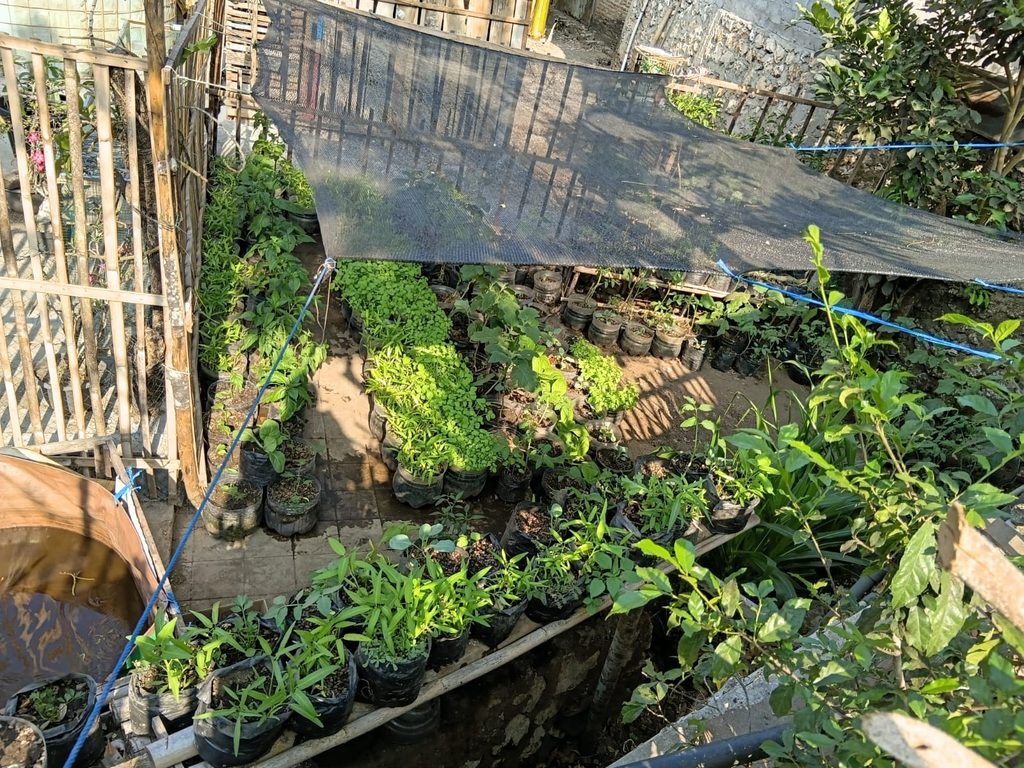
Photo 2. Ratna’s vegetable garden in the side yard of her home.
Gardening in my yard also gives me something I can do on my own. I do not need a large plot of land. Even a little is worthwhile, as long as it produces something that can benefit my family.
To all housewives, do not be discouraged from trying to grow vegetables in your own yards.
I have learned from my everyday experiences. Being a housewife does not mean that my only responsibility is doing household chores. Even in my own yard, I can grow vegetables, help meet our kitchen needs, and contribute something useful to my family.
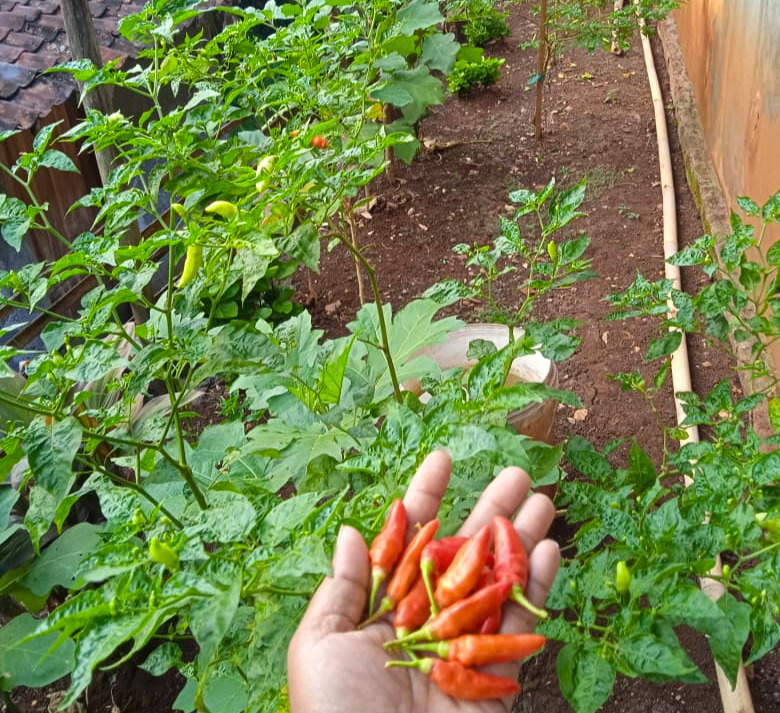
Photo 3. Chili plants growing in Ratna's garden.
Dealing with the Boss also takes patience. I used to be afraid, but now I am getting used to the monkeys. When our plants are damaged, we plant them again. When the monkeys come, we look for another solution. It does not always work, but we keep trying.
That is my story and my everyday experience as a housewife living alongside the monkeys. I used to be afraid of them, but now I am not quite as frightened as I once was. I hope that, in the future, my husband, my parents, and I can find a better way to protect our plants while ensuring that our family can continue to benefit from what we grow.
In the end, what we are looking for is not a way to make the Boss disappear forever, but a way to protect our home, our plants, and our family’s livelihood in a way that is as safe as possible for everyone.
Editor: Luthfi Maulana Adhari/Konde.co