
Serving Through Preparedness
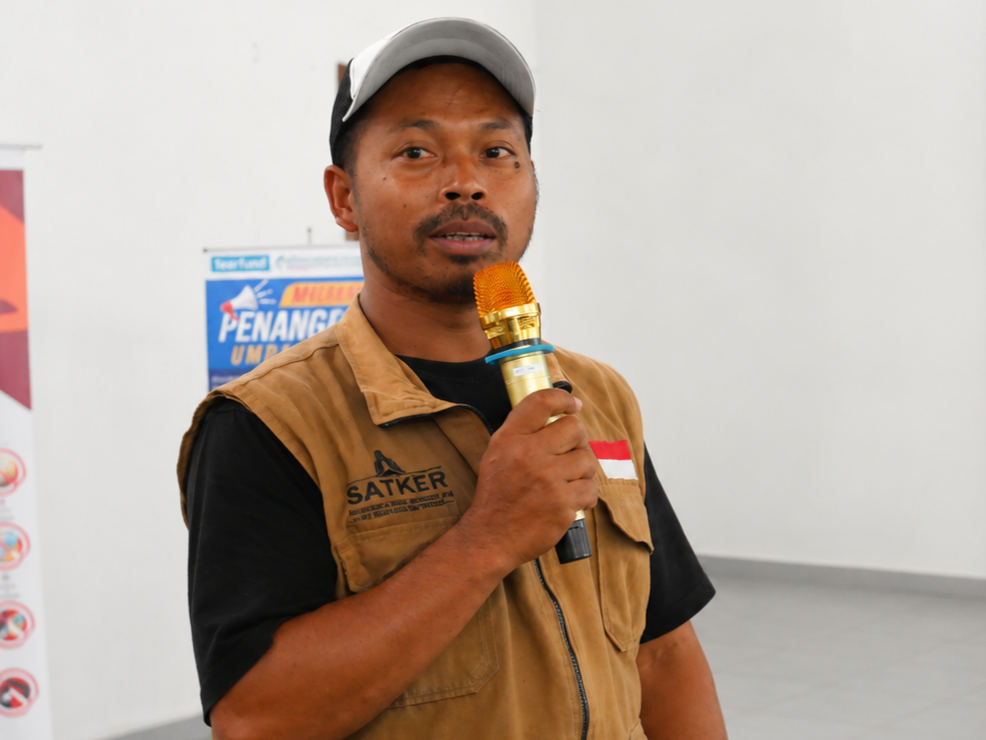
For Miskiran Boim, who is known simply as Boim, serving the community has long been part of his life. Now 41 years old, he has been actively involved for more than a decade with the Kulon Progo Classis Diaconal Working Unit, supporting a range of social ministries, including disaster management. Amid recurring hazards of drought, flooding, strong winds, and extreme weather in Kulon Progo, Boim believes that the Church Disaster Preparedness Team enables the church to respond more closely to the needs of the community.
The spirit of cooperation has long been part of life in Ngentakrejo Village. Whenever a disaster occurred, volunteers would quickly come together to respond. However, according to Boim, disaster response at that time was still largely based on individual initiative. “Back then, we didn’t have any standard procedures. When a disaster happened, volunteers would simply go directly to the location. Whoever was able to help would come,” he recalled. There were no clear roles, coordination mechanisms, or needs assessments in place. Although the spirit of service was already strong, the church did not yet have a clear system for organizing disaster response in a more systematic way.
Through the SIAGA Program, GKJ (Javanese Christian Church) Ngentakrejo laid a new foundation for its disaster ministry by establishing the Church Disaster Preparedness Team, a church-based group focused on disaster preparedness and emergency response.
For Boim, the presence of the team changed how the church engages with the community. “The church serves in many different ways, and one of those expressions of service is through the Church Disaster Preparedness Team,” he said.
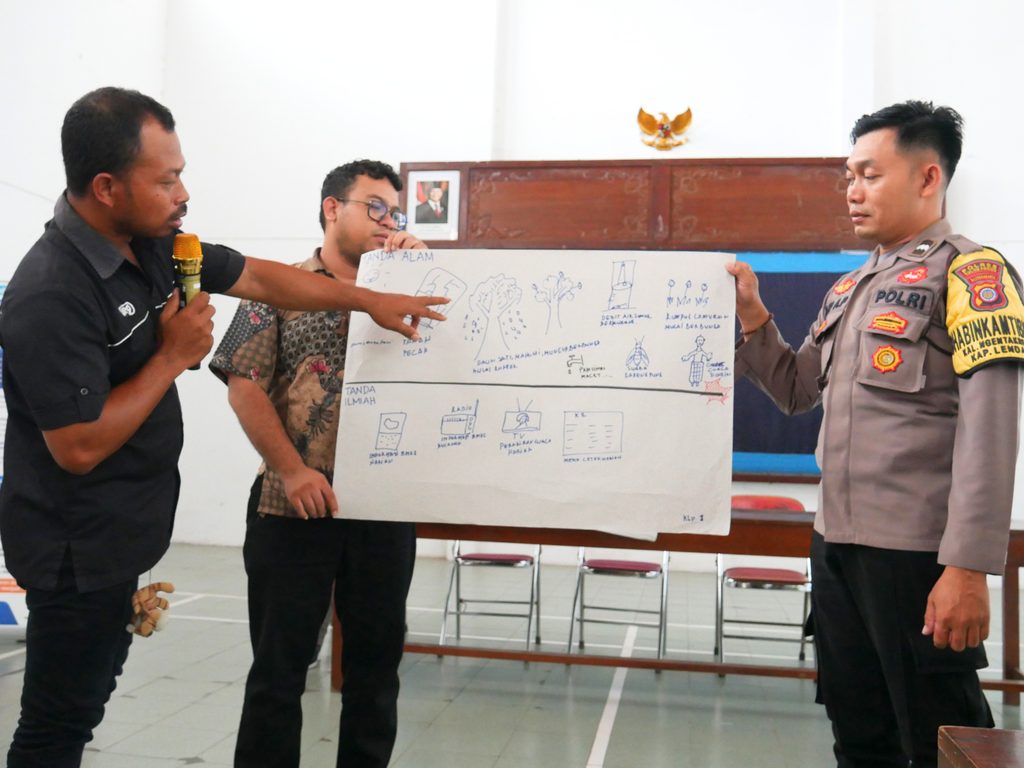
Photo 1. Boim (left) presented the results of the disaster risk mapping in Ngentakrejo Village.
Participating in a series of training sessions with YEU gave Boim a new perspective on disaster management. Previously, he and other volunteers would respond only after an incident occurred. Now, they have learned how to identify hazards, assess local capacities, and prepare actions before disasters occur.
“Through the training with YEU, I learned how to map disaster risks, identify the capacities we (the Ngentakrejo community) already have, and strengthen our preparedness, response, and anticipatory action,” he explained.
Gradually, the church began to see preparedness not only as a response after a disaster, but also as an integral part of its ministry to both congregation members and the wider community. The Church Disaster Preparedness Team also developed a clearer working system, including defined roles and coordination mechanisms for emergencies.
Growing Stronger as a Disaster-Resilient Church
The system developed by the Church Disaster Preparedness Team began to show its value when disaster struck. When a tree fell, Boim and the team no longer simply went to the site. They identified the needs, coordinated the personnel required, and made sure the necessary equipment was available, allowing them to respond more quickly and in a more organized way.
The same system was put into practice when drought affected several hamlets in Ngentakrejo. Together with the team, Boim coordinated with the Diakonia Service Unit of the Kulon Progo Classis and the Regional Disaster Management Agency (BPBD) to request clean water assistance for affected areas, particularly in the hilly hamlets of Bendo, Pereng, and Temben. Logistical support from BPBD also helped strengthen the team’s capacity to respond to various emergency situations.
Even so, the growing system comes with a commitment that continues to be tested. Being a member of the Church Disaster Preparedness Team, Boim said, means being ready to respond whenever disaster strikes. For him, “Once you have the heart of a volunteer, you can’t just stay still. You keep thinking about what you can do, and no matter what it takes, you have to be there.”
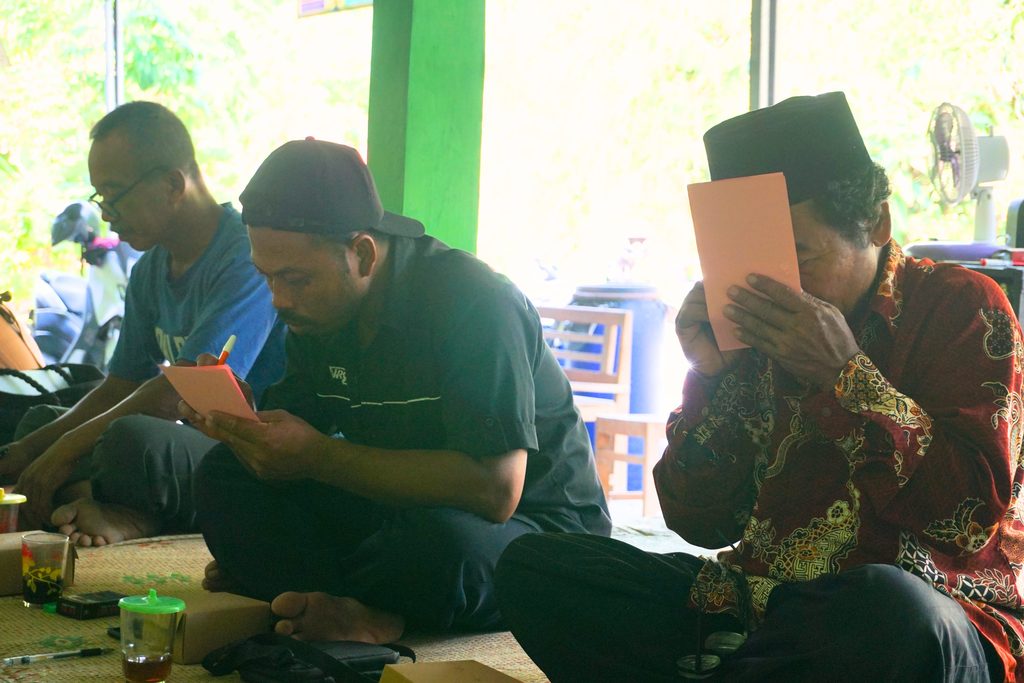
Foto 2. Boim (tengah) bersama komunitas dalam pelatihan pembuatan pakan ternak fermentasi dan arang sekam.
Looking ahead, Boim hopes that the GKJ Ngentakrejo Church Disaster Preparedness Team will continue strengthening its members’ capacities, expanding its logistics resources, and building broader collaboration with various stakeholders. For him, building a disaster-resilient church is not only about being prepared for emergencies, but also about nurturing a spirit of service so that the church can continue to stand alongside and grow together with the community.
“The Church Disaster Preparedness Team is a form of service. Anyone can join and play a role,” Boim concluded.