
Every dry season, the women of Panggang I must find ways for their families to survive. Beyond relying on relief aid, they are creating their own solutions to face the climate crisis on the household front..
Ika Rachmani, Women Leader of the Harjo Manunggal Women's Group
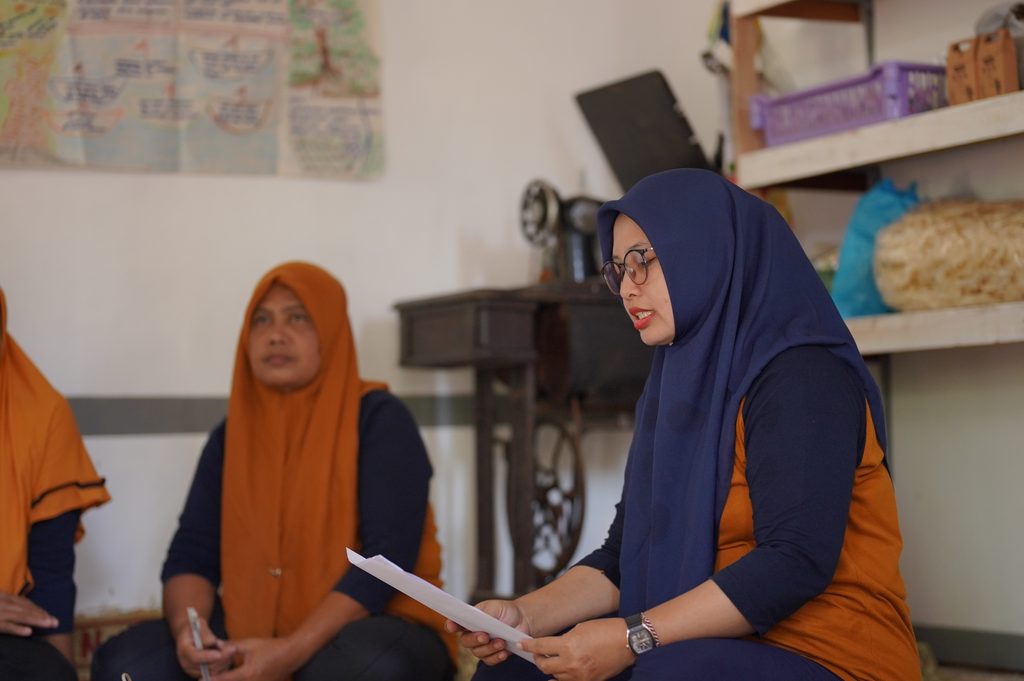
In the highlands of Gunungkidul, the hamlet of Panggang I in Giriharjo Village is home to about 1,900 people. Perched higher than surrounding areas, the hamlet faces severe water shortages every dry season. Plants wither, crops fail, and economic instability strains both families and the broader community. During the day, the heat is scorching—feeling like hot iron against bare skin—and accompanied by harsh winds. Dust sweeps unpredictably through the air, triggering widespread coughing and skin irritation.
When the drought sets in, the roles of local women shift dramatically. Typically, they assist their husbands in the fields. But when dry conditions hit, male heads of households often migrate to cities as daily construction workers. Left behind, adult women become the primary farmers. Consequently, the women of Giriharjo bear a heavy double burden.
On one hand, they manage the agricultural workload in the men's absence. On the other, domestic duties and caregiving remain entirely on their shoulders. On top of farming and running households, they must haul water from communal reservoirs whenever home supplies run out.
Many children fall ill with acute respiratory infections, sore throats, or typhoid fever. Elderly residents often suffer shortness of breath from bediding—the bitter nighttime cold characteristic of Gunungkidul's dry season. Balanced nutrition is scarce; household gardens dry up, leaving families entirely dependent on market-bought produce.
Every dry season, Panggang I becomes a frequent destination for social initiatives by charities, civic groups, and government agencies. The most regular relief comes from the Regional Disaster Management Agency (BPBD), distributed through the district level down to the most vulnerable households.
One day, a message buzzed on my phone.
"Ting..." sound in my phone
"Assalamualaikum wr. wb. Hello, Ibu. I am Ibu Sinta, representing SMA N 5 Yogyakarta. We would like to request permission to conduct a charity drive and deliver clean water tankers to your hamlet."
I replied promptly:
"Waalaikumsalam, Ibu. Thank you for your generosity toward our residents. We warmly await your arrival."
After a brief exchange, they confirmed they would donate five tankers of clean water for most at-risk families.
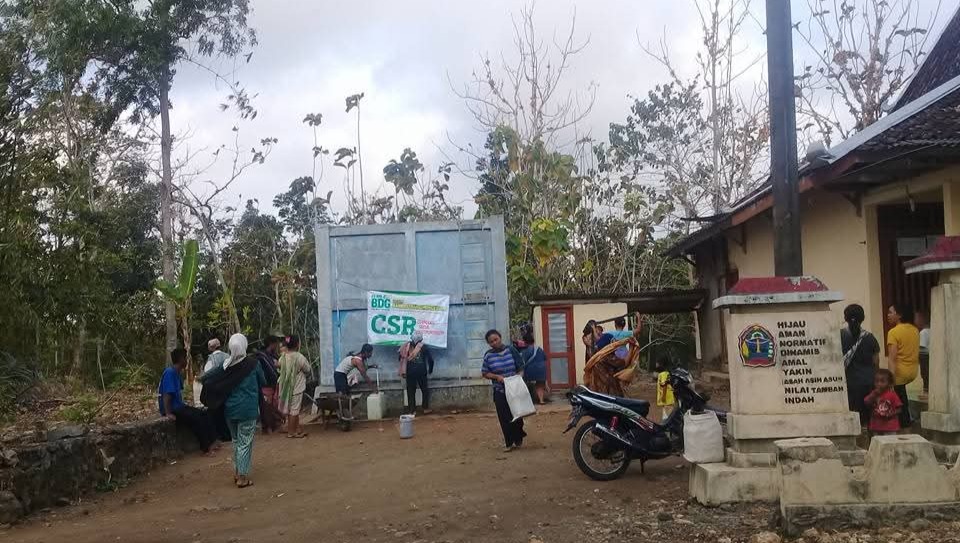
On Sunday, August 9, 2026, five 5,000-liter water tankers arrived in line. A banner across one read: "SMA N 5 YOGYAKARTA FAMILY SHARES CLEAN WATER." The roar of the tanker engines acted like a call to gather. Knowing water had arrived, residents rushed to the hamlet hall carrying jerrycans and repurposed plastic jugs. Slung over their shoulders were jarik—traditional batik slings—ready to carry the heavy containers back home.
After a brief handover ceremony and a symbolic photo with the teachers accompanying the delivery, a tinge of sorrow lingered beneath the commotion.
I sighed silently: "Dear Lord, why must this scene repeat itself year after year?"
As the local hamlet head (Ibu Dukuh), my duty is to serve the community. Once the photos were taken, we set out to deliver water according to our priority list. Our first stop was the home of Mbah Tugirah, an elderly woman who lives with her equally frail husband.
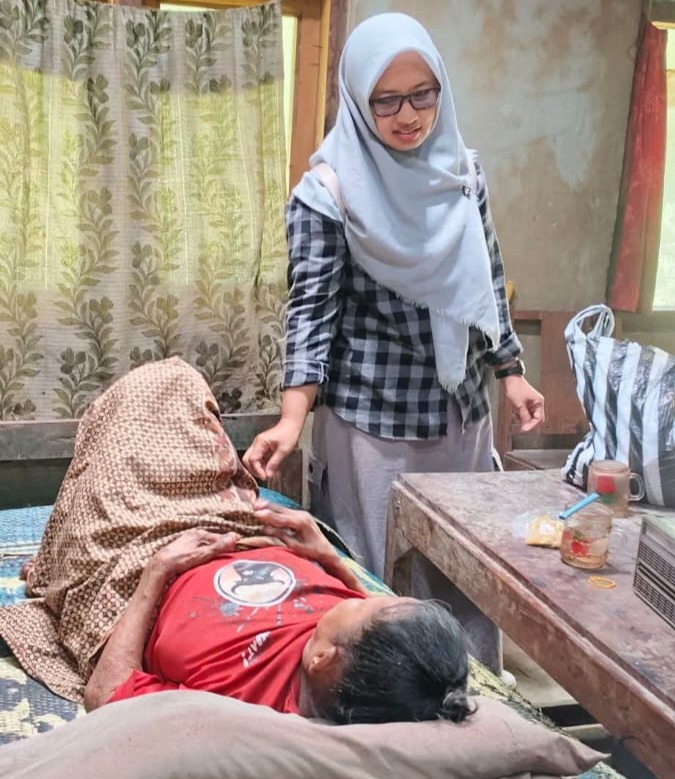
Suffering from a chronic condition, Mbah Tugirah cannot move around easily. Her husband usually fetches water from the nearby mosque's cistern because their home reservoir is tiny.
"Good afternoon, Simbah. I’m here with our donors who brought clean water for you," I said.
"Good afternoon, Head of Hamlet. Thank you for the help. May Allah grant you blessings," Mbah Tugirah replied softly.
The tanker driver approached me with a concerned look,
"Where is the storage tank? There isn't one here—just this tiny bucket."
I ran over to her neighbor, Mbah Yanto.
"Mbah Yanto, may we pour Mbah Tugirah's share into your cistern? She doesn't have storage. Please share this water between both households."
"Of course, Head of Hamlet. We will share it," Mbah Yanto agreed.
Once the water was unloaded, we moved quickly to fill the remaining four target locations.
Days passed normally. But on the third morning, the neighborhood chief (Pak RT) arrived at my house out of breath. He reported a heated argument between Mbah Yanto and Mbah Tugirah’s family. We rushed to the scene to mediate.
"That aid was meant for us! Why are you using so much water just to bathe?" Mbah Tugirah’s husband shouted.
"Bu Dukuh said we should share it! I’m using it because it's my cistern," Mbah Yanto argued back.
I worked to calm both sides, explaining that when resources are scarce, even well-intentioned aid can create friction if capacity and needs differ. I reminded them: "Don't let the drought dry up our compassion. Seasons change, but we remain neighbors. We cannot survive in this village alone."
In another section of the hamlet, where many households similarly lacked large storage, I designated the public cistern as a delivery point. I encouraged nearby residents to gather water there together, hoping for a fair distribution. Yet that, too, triggered conflict.
"How can you be so selfish? Why are you taking water over and over again?" Mbah Tukijan scolded.
"It’s a public tank! We’re all free to take what we need. You’ve been making trips back and forth too!" countered Pak Sari, who was loading filled jerrycans into side baskets (bronjong) mounted on his motorbike.
"It’s not the same! We are walking on foot, carrying heavy jugs by hand, while you’re speeding back and forth on a motorbike!" chimed in Mbok Warinem from the queue.
A shouting match erupted in the yard. Frustrations flared over perceived unfairness between those hauling water manually and those using motorbikes.
These conflicts arise every dry season. Drought arrives, relief follows, but alongside aid comes friction among neighbors. I often thought to myself: If only aid organizations provided water storage units instead of just water, residents could store their own supply, reducing conflict.
Drought wears down patience and strains community bonds. Yet the dry weather will not leave simply because we ask it to; we must adapt, while holding onto faith that the season will eventually turn.
Amid these challenges, encouraging shifts began to take root. I realized that climate adaptation cannot rely solely on waiting for external emergency aid; it must be built from within households and the community.
During a meeting at the Panggang I hamlet hall, I raised the topic with our residents
"Everyone, let us look at this with open minds. How do we endure these current conditions and prepare ourselves before the next dry season arrives?"
I continued: "Every dry season, we face the exact same problem: a lack of water. Why? Because most of us do not have large enough containers to hold sufficient reserves. So let us try to create larger storage capacity on our own."
Pak Slamet, representing the residents, interrupted politely: "I'm sorry, Bu Dukuh.
Pak Slamet, representing the residents, interrupted politely: "I'm sorry, Bu Dukuh. You are right, but how can families like us afford permanent concrete tanks or expensive commercial water tanks?"
Before I could answer, A man spoke up
"Can’t the hamlet office secure storage aid for us, like what Pak Mujan received last year?"
Pak Ngadino said
I took a deep breath before addressing their questions one by one.
"Government aid like Rainwater Harvesting Tanks (PAH) does exist, but allocations are limited each year and prioritized for the most vulnerable families,"
I explained gently and continued
"Storage does not have to be a permanent concrete tank or a costly plastic water tower. We can use heavy-duty tarpaulins to construct storage ponds. I built one at my own home five years ago, and it is still holding up well." I paused to let the idea sink in.
"We cannot rely entirely on government assistance. We must start taking small, independent steps ourselves so we can navigate these dry months with greater security."
During the recent water delivery, I was surprised and moved to see Mbah Saniyem. She now had a large tarpaulin pool in her yard, funded by her child working in the city. The structure was framed neatly and covered with woven coconut leaves to keep out debris.
"Bu Dukuh (Head of Hamlet), I now have storage that can hold two whole tanker loads! After our meeting at the hall, I called my child in the city to ask for a tarpaulin, and they sent one right away," Mbah Saniyem shared proudly.
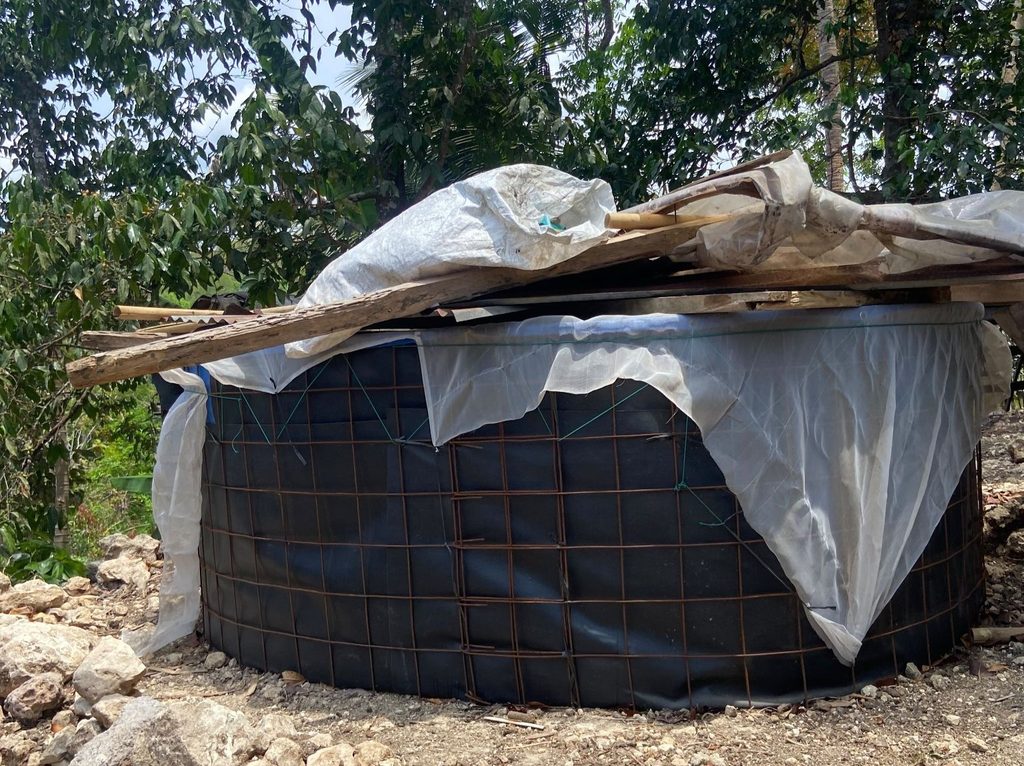
Life in our village is defined by constraints. Yet within those limits, residents possess wisdom, resolve, and their own strategies for adapting to a changing climate.
I am grateful because everything that happens in the community makes me a stronger person and helps me mature mentally through every experience.
As a woman leading in this community, I see firsthand how climate change alters more than just the weather—it redistributes household labor. When men migrate for work, women take on farming, domestic duties, and the constant search for water.
I believe God will never test the servant beyond their capacity. Women are not merely the group most impacted by the water crisis—we carry the practical knowledge and lived experience needed to help our communities endure. Small steps, rooted in home and community, can turn vulnerability into resilience.
For us, prolonged drought is no longer a rare natural anomaly; it is an ongoing climate reality happening year after year. Short-term relief responses are not enough. What we truly need is long-term adaptation.
Edited by Luthfi Maulana Adhari /Konde.co
Mbok Tugirah and Mbok Warinem passed away in September 2026.