
Mbok* Yem, a single mother in Gunungkidul, fell into debt with a door-to-door moneylender to pay for her daughter’s education after drought wiped out her harvest. Her determination to turn household and garden waste into organic fertiliser eventually helped her break free from debt
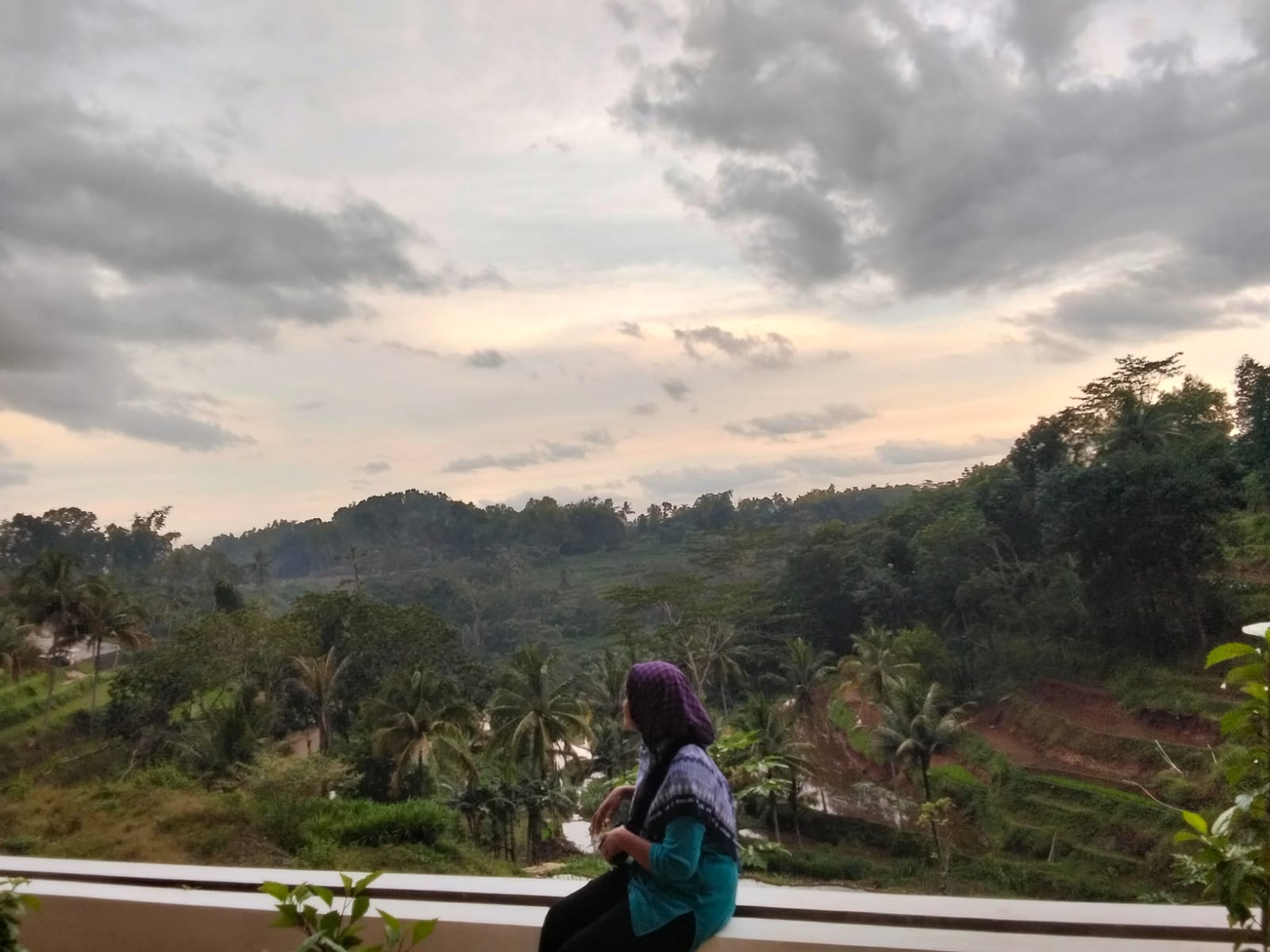
Ngalang Village, in Gedangsari Sub-district, Gunungkidul, Yogyakarta, lies among the hills. Most people here make their living from farming and raising livestock. Their days are spent working in the fields, gathering animal fodder or tending their crops in the rice paddies.
This is where mbok Yem, a middle-aged woman, lives with her only daughter, whom she affectionately calls Genduk* Tari. Her husband passed away years ago, leaving her to work alone every day to provide for herself and her daughter.
Every morning, mbok Yem gets up early to prepare breakfast and a packed lunch for Tari.
“Nduk Tari! It’s already time for the dawn prayer. Come on, wake up, dear,” she calls.
“Just a little longer, Mbok,” Tari replies.
“Come on, it’ll be too late otherwise. Get up and pray,” mbok Yem urges her.
“All right, all right, Mbok,” Tari answers.
Tari quickly gets up to perform her dawn prayer. Mbok Yem has already prayed, so she heads straight to the kitchen and lights the traditional wood-burning stove. She gets busy preparing breakfast and lunch for her daughter.
The sun is up, and it is time for Tari to leave for school. She takes a packed meal of fried tempeh, shrimp paste sambal, papaya leaf vegetables and tiwul uleng, a delicious mak nyuslocal dish popular in Gunungkidul and the surrounding areas. It is made by combining white rice with tiwul, a traditional food made from dried cassava.
““Mbok, I’m off to school!” Tari calls as she says goodbye.
“All right, dear. Take care,” mbok Yem replies.
After her daughter leaves, mbok Yem sets off for the rice field. She rents a plot of land measuring about 500 square metres from a relative and grows rice there entirely on her own. From ploughing the soil and planting the seedlings to weeding and harvesting, she does everything herself. There is no one else to help her.
Then, one day, the rain stops coming. Weeks pass without a drop, and mbok Yem grows increasingly worried. Looking at her drying rice plants, she whispers to herself, “Oh, God, my rice is drying up. What am I going to do?” (Ya Allah, padiku sudah mulai kering, aku harus bagaimana ini?”
The soil in her field is drying out more quickly than before and has lost its fertility. The rain still does not come. The dry season is lasting longer, and the heat feels more intense and the air drier than in previous years. Mbok Yem cannot understand why this dry season feels so much harsher.
Over the years, she has noticed that many farmers have stopped using animal manure. Instead, they prefer factory-made chemical fertilisers, believing these will make their crops grow better and produce more quickly.
But the soil seems to be getting harder and less fertile. It no longer feels loose and crumbly, and the rice fields dry out faster and struggle to retain moisture. As a result, crops dry up and die, reducing yields and sometimes leaving farmers with nothing to harvest. Mbok Yem is deeply troubled by what is happening.
By midday, it is time for her to head home. She walks back carrying a bundle of kolonjono, a type of grass used as livestock fodder, for her beloved goats. Alongside farming, she also looks after the goats belonging to her neighbour, Pak Tanto.
Not long after she arrives home, Genduk Tari returns from school.
“Assalamualaikum mbok, I’m home!” Tari calls out.
“Alhamdulillah,” mbok Yem replies.
“Mbok, my final exams are coming up next week,” Genduk Tari tells her.
Mbok Yem fell silent at once and said to herself, “That means I have to pay the school fees right away.”
This season’s harvest is barely enough to cover their daily food, let alone the school fees that are now due.
“Where am I going to find the money to pay for my daughter’s education?” she wonders.
Mbok Yem then went around to her friends' homes, hoping they could lend her some money to pay for her child's school fees. However, none of her friends were able to help her.
While on her way back from a friend’s house, mbok Yem encountered a man with an attractive and elegant appearance. The man approached her, struck up a conversation, and eventually offered his “help.”
Let’s call him Bang Cit. He offers to lend Mbok Yem the money she needs, on the condition that she makes repayments every week in fixed amounts.
Mbok Yem knows the loan will be a heavy burden, but she feels she has no other choice. Her harvest has barely covered their daily needs, leaving nothing to set aside for school fees.
She cannot borrow from the village cooperative either, because she is not a member. To qualify for a loan, she would first have to join and pay both an initial membership deposit and regular contributions.
At least Tari’s school fees are taken care of. But Mbok Yem’s financial troubles are far from over. To earn extra income and repay the loan, she begins going from house to house collecting laundry.
She carries the clothes to a nearby river to wash them, then irons them and delivers them back to their owners. For all her hard work, she earns very little.
Nearly everything she makes goes towards repaying the loan. She cannot enjoy the fruits of her labour because so much of her income is swallowed up by high interest payments.
One day, mbok Yem was sitting behind her house. She noticed a large amount of leaf litter scattered all around. She thought to herself, "If only I could turn this waste into organic fertilizer—which is safer to use—perhaps the environment wouldn't be so hot. The soil would become looser and retain more moisture. The rice paddies wouldn't dry out as quickly, so the rice plants wouldn't wither so easily. The harvests might improve, and then I wouldn't have to go into debt anymore."
She shares the idea with a friend, Yu Tun. At first, only Yu Tun responds to her suggestion. Together, they begin exploring how to turn fallen leaves into organic fertiliser.
Organic fertiliser, they believe, could help maintain soil fertility and moisture. Mbok Yem keeps talking about the idea with other friends, knowing that she will need the support of women in her community to make it happen.
Feeling that she had received plenty of support from her friends, Mbok Yem took the initiative to organize a group training session on making organic fertilizer. However, various obstacles arose, as the training required funding
Mbok Yem sits down with her friends to discuss the challenges they face and map out the difficulties experienced by women in their village. Drought and crop failure have left women carrying a double burden. When harvests cannot provide enough to meet household needs, women are often forced to borrow money, creating another problem on top of the first.
Together, Mbok Yem and her friends decide to put their concerns into a proposal and submit it to YAKKUM Emergency Unit (YEU), a non-governmental organisation based in Yogyakarta. They hope YEU will provide funding for organic fertiliser training.
As it happens, just a few weeks earlier, mbok Yem and yu Tun had attended a women’s leadership training organised by YEU in Yogyakarta. YEU works on social and community issues, particularly disaster response and preparedness. From her experience, mbok Yem knows that the organisation also cares deeply about disasters linked to climate change.
She hopes the organic fertiliser they produce will be used by farmers throughout their hamlet. She also wants to share the skills they learn with the wider community, so that more people can make and use organic fertiliser.
In this way, soil fertility can be maintained and the ground can retain moisture for longer, allowing rice to grow even when rainfall is scarce. Better harvests could improve household incomes and ease the double burden women face. They could become more financially secure, provide for their families and live free from debt.
After working hard to gather data documenting the community’s vulnerabilities, Mbok Yem and her friends finally receive approval for their proposal from YEU. The organic fertiliser training goes ahead successfully.
Mbok Yem and the other women learn how to make compost from organic waste and liquid fertiliser from kitchen scraps. They also gain new knowledge about climate change adaptation and how to respond to its impacts.
Eager to put what she has learned into practice, Mbok Yem applies the organic fertiliser to her rice field. To her relief and delight, her harvest improves. At last, she is able to repay her debt to the moneylender.
Her happiness grows even more when she hears some wonderful news from her daughter.
““Mbok! Mbok! I won a prize!”Tari shouts excitedly.
“What prize, dear?”Mbok Yem asks.
“Look at my report card, Mbok! I came first in my class. My teacher gave me a schoolbag as a prize!” Tari exclaims.
“Alhamdulillah I’m so happy, dear. Congratulations! May you always be blessed with good fortune in this life and the hereafter,”Mbok Yem says with joy.
*Mbok is a respectful form of address for an older woman or mother.
*Genduk is a Javanese term of endearment for a girl, used to express affection or familiarity.
*Yu is a shortened form of mbakyu, a Javanese term of address for an older sister or an older woman.
This article is a collaboration between YAKKUM Emergency Unit (YEU) and Konde.co as part of #Kedip (Konde Literasi Digital Perempuan), a women's digital literacy programme.
Editor: Anita Dhewy
Author: Ine Indriyani
Ine Indriyani works as an early childhood education teacher and is an active member of Kelompok Manthili Tangguh in Ngalang Village, Gunungkidul, Yogyakarta.