
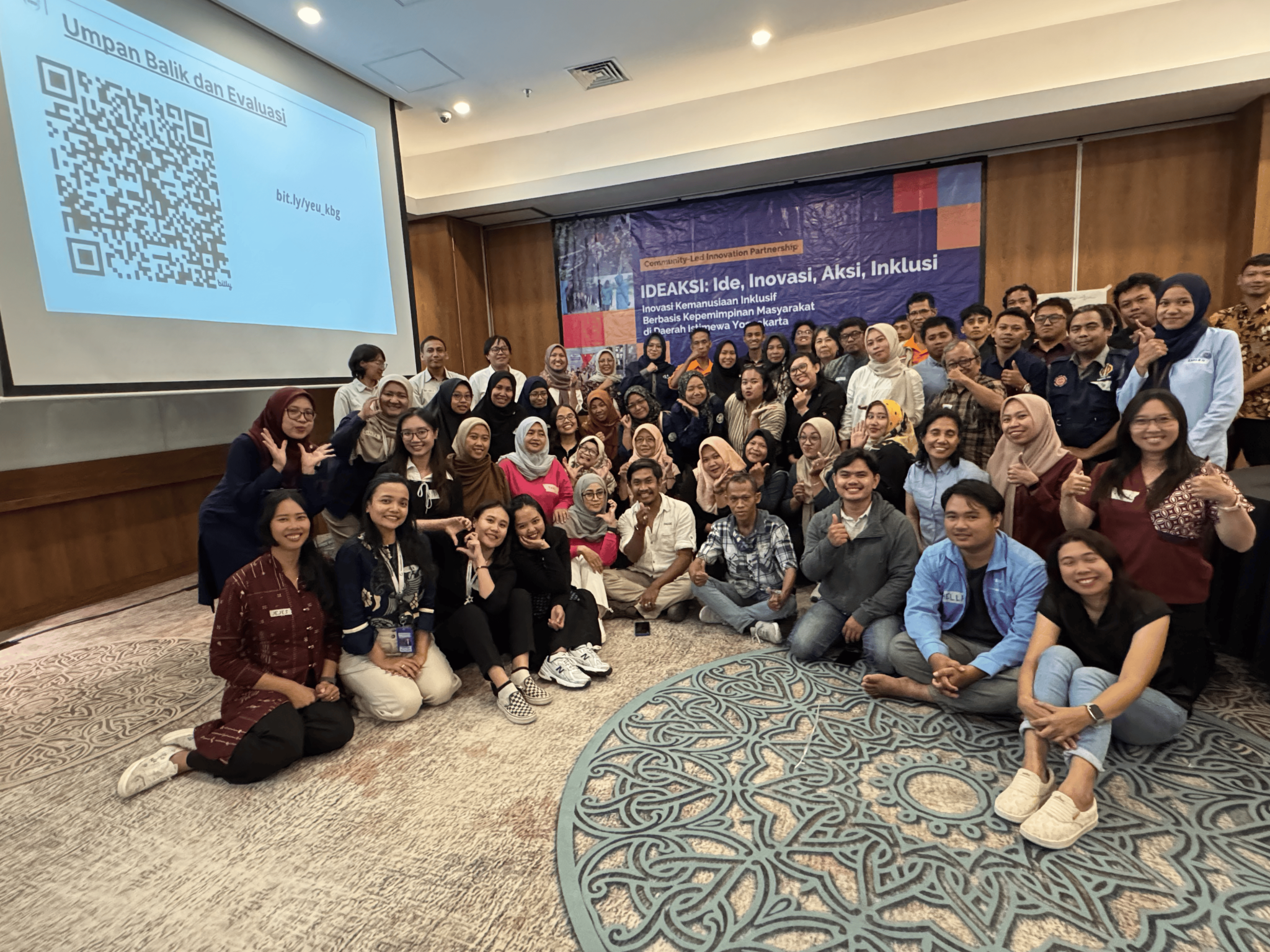
In disaster situations, the risk of gender-based violence (GBV) and violations of protection for at-risk groups often increases. Weak access to services, disruption of protection systems, and limited coordination during emergencies leave women, children, older people, and persons with disabilities in increasingly vulnerable conditions. YEU, through the CLIP – IDEAKSI initiative, organized a Workshop on Protection and Gender-Based Violence Referral Management in Disaster Situations.
The event, held on 27 January 2026, was attended by more than 60 participants, including civil society organizations, local government agencies, and disaster volunteers. The workshop served as a space for learning and reflection to strengthen understanding and practices of integrated disaster risk reduction and prevention in community-level disaster preparedness and response.
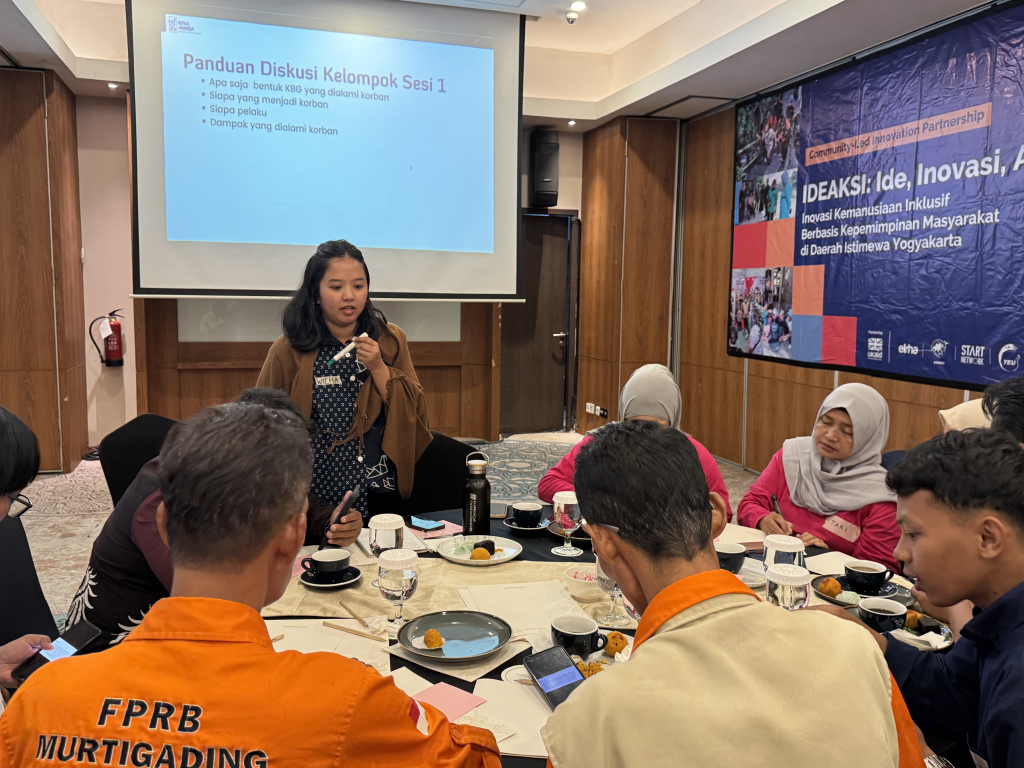
Humanitarian responses cannot focus solely on physical rescue and meeting basic needs. A protection approach, including prevention and response to GBV, needs to be an integral part of the pre-disaster phase. Local innovators and community actors are seen as having a strategic role because they are closest to the community and are often the first to respond to emergency situations.
This workshop was facilitated by Rifka Annisa WCC with an introductory session on protection and GBV in disaster situations. Participants were invited to understand the principles of protection, the forms of GBV risks that can arise in emergency situations, and the roles of various actors in prevention and response efforts. The discussion emphasized the importance of a gender-sensitive, inclusive approach that upholds the safety and dignity of survivors.
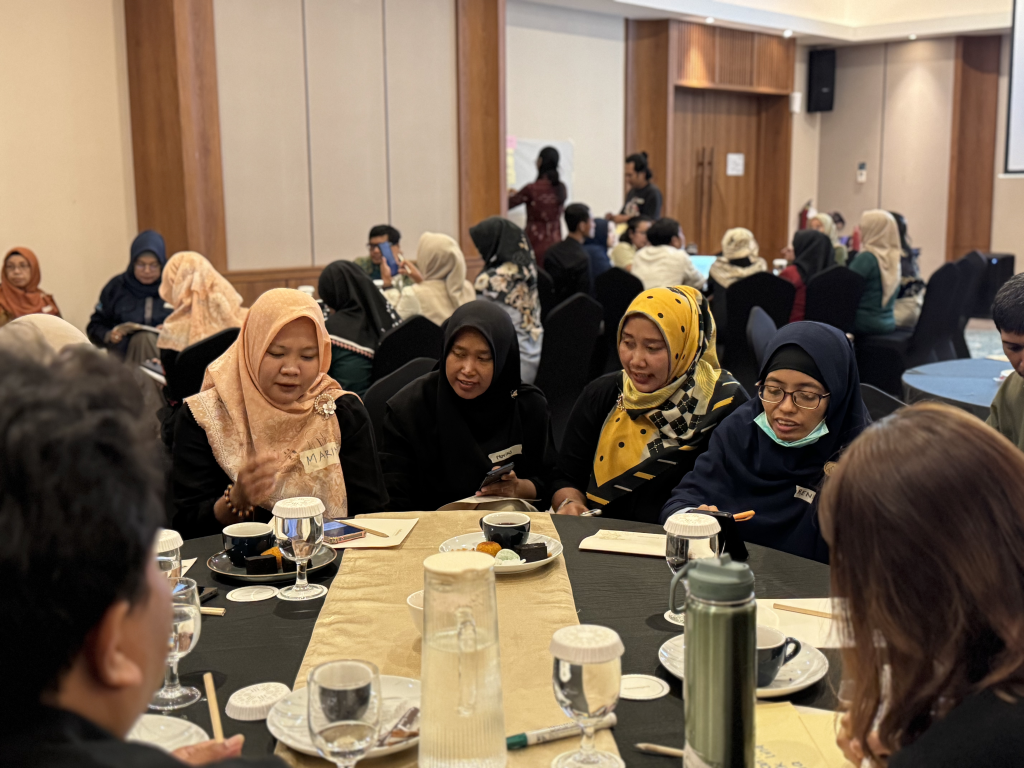
The second session continued with a specific discussion on protection referral management and KBG. Participants discussed the coordination challenges often encountered in the field, including limited information, unclear referral processes, and the lack of integration of protection issues in disaster simulation and planning. Through this session, participants were also introduced to standard referral pathways and best practices implemented by various parties, while distinguishing the roles that community actors can play and the cases that need to be referred to professional services.
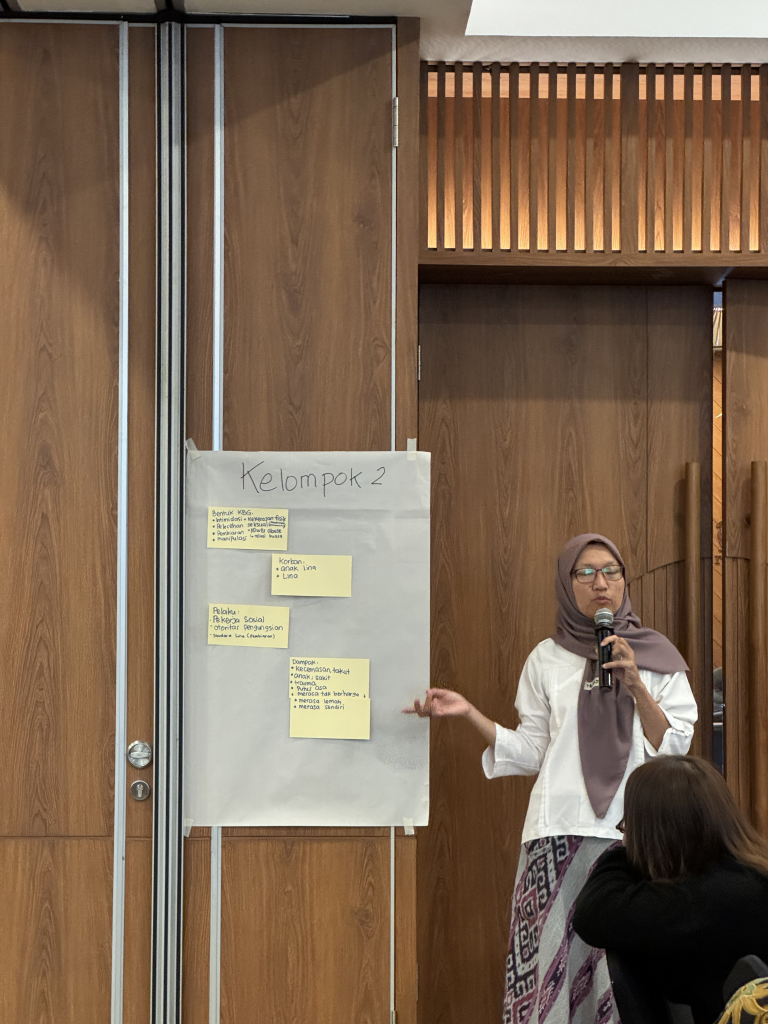
To align directions, activities took place in focus group discussions (FGDs) involving all participants. In these FGDs, participants explored their field experiences, identified key challenges, and formulated strengthening needs so that referral mechanisms and KBG could run more effectively at the community level, both before and during disasters. Participants also mapped existing communication and coordination platforms, as well as advocacy opportunities to connect community work with clusters and disaster contingency planning.
The results of the discussions were then presented in a plenary session, which served as a forum for the exchange of ideas across groups. This workshop produced a number of important outputs, including a summary of the findings of discussions related to practices, challenges, and needs for strengthening protection and KBG in disaster situations; the development of a referral mechanism for protection and KBG at the community level; and strategic points for strengthening communication and coordination between innovators, YEU, and related cluster platforms.
Through this workshop, YEU reaffirmed its joint commitment to strengthening community-based protection preparedness. It is hoped that the lessons learned and recommendations from this activity can serve as a foundation for building a referral system that is safer, more ethical, and more responsive to the needs of at-risk groups, so that disaster risk reduction efforts can be more inclusive and sustainable.
—
Author: Desy Putri Ratnasari (Information and Communication Staff, CLIP IDEAKSI Project)