
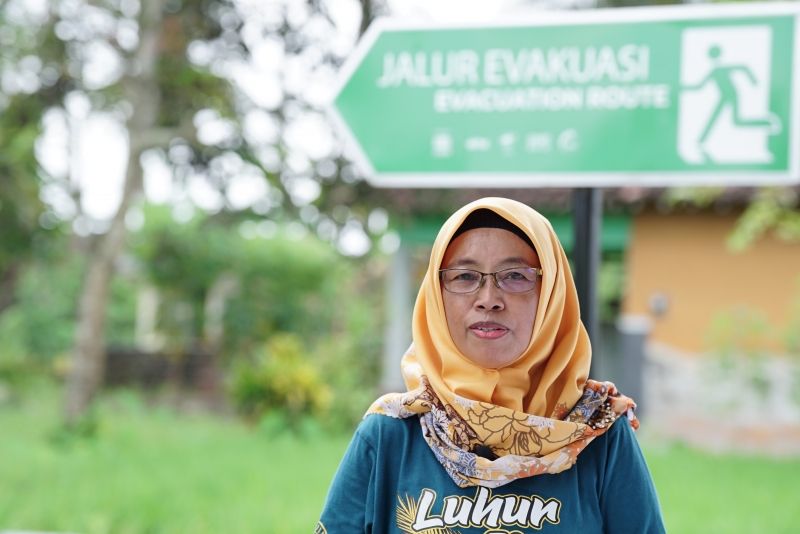
In the corner of Taksi Kencana (Inclusive Disaster Preparedness Education Park) located in Sidoluhur, Yogyakarta, there is an extraordinary woman, Yustina Wardhani, or more familiarly known as Ibu Dani. In her role as a mental health volunteer and posyandu cadre, Ibu Dani has inspired many people. Drawing from her real-life experiences, she has worked alongside the community and individuals with psychosocial disabilities (ODDP) to create a space that ignites hope.

Taksi Kencana has become a fun learning space for people with mental health issues, offering activities ranging from gardening and singing along to inclusive evacuation simulations, peer support sessions, and livelihood programmes that teach independence. Taksi Kencana's innovation is not only a place to gather, but also builds confidence, reduces relapse and removes the stigma that has long been attached to people with mental health issues in society.

Ms Dani's experience as a posyandu cadre and companion to children with psychosocial disabilities, alongside the Luhur Jiwo Self-Help Group in Sidoluhur Village, led to the innovation of the Taksi Kencana initiative. This initiative recognised the absence of disaster preparedness initiatives specifically designed for individuals with psychosocial disabilities as a safe and interactive space to connect mental health recovery processes with disaster awareness, equipping individuals with psychosocial disabilities and their families with practical preparedness skills, while also reducing stigma in the community. The impact of the Taksi Kencana innovation is evident in how people with psychosocial disabilities and their families feel more confident in facing emergency situations and have a better understanding of their needs and capacities.

From Taksi Kencana, Mrs Dani, as a representative of SHG Luhur Jiwo, gained international recognition when she won an award at the Asia Pacific Ministerial Conference on Disaster Risk Reduction (APMCDRR) for her local leadership in promoting inclusive disaster risk reduction. Her story shows that locally-led innovation, rooted in lived experience, can create systemic change and provide examples of good practice for people with disabilities, particularly those with psychosocial disabilities.
However, for Mrs Dani, the struggle is not over yet. She still has a big dream:
“One day, I would love for Taksi Kencana to become like a full-day school for ODDP. They could come three times a week, learn life skills, arts, gardening, and even knowledge about disaster preparedness. So that they feel like they have their own school, a place of learning to be proud of, as well as a second home that always welcomes them.”

Moving forward, Mrs. Dani and SHG Luhur Jiwo will continue to promote inclusive activities not only to reduce the stigma surrounding people with disabilities, but also to enable them to continue working, being productive, and ultimately becoming self-reliant. Taksi Kencana is merely a medium and learning space. The rest, Mrs. Dani believes, lies in the hands of ODDP and their families to become more resilient in facing disasters while realising their dream of an inclusive school in the heart of a warm and welcoming village.
——–
Author: Desy Putri Ratnasari
The content and photos have been approved by the source.