
As part of its commitment to encouraging meaningful participation by at-risk groups, the SEHATI project consistently holds regular meetings of the Sub-Cluster for the Elderly, Persons with Disabilities, and Other Vulnerable Groups (LDR Sub-Cluster). These meetings are one of the SEHATI project's key strategies to ensure that the voices and needs of these groups are accommodated in the disaster management coordination process. More than just a coordination agenda, these sub-cluster meetings are designed as a space for mutual learning and information sharing among members, thereby creating stronger synergy and understanding of the issues faced by vulnerable groups in the context of disasters.

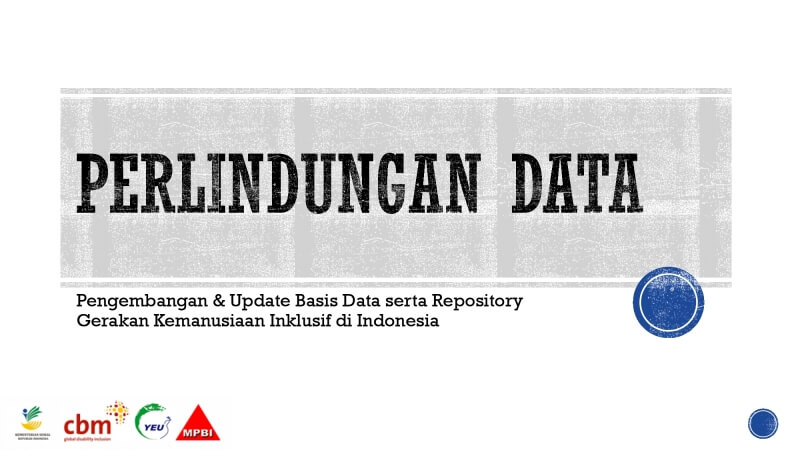
The second meeting of the LDR Sub-Cluster was held on 24 April 2025 online via Zoom, with the topic of Data Protection. The main focus of this meeting was to encourage more up-to-date, sustainable and accessible management of data on at-risk groups, so that it can be used effectively in disaster management in Indonesia. The event involved various organisations representing persons with disabilities, the elderly, and other at-risk groups, as well as other humanitarian organisations. In addition, representatives from the Regional Disaster Management Agency (BPBD) from a number of regions such as Sumatra, Kalimantan, Java, and Sulawesi were also present. The discussion was dynamic, covering crucial issues such as data leaks, secure data management procedures, and the importance of regular data updates. Participants emphasised that the main challenge is to ensure that data on people with disabilities is always up to date and integrated down to the village level, so that interventions in disaster situations can be targeted appropriately.

During the discussion session, Hijaz Jalil, as the facilitator, provided a number of important inputs regarding personal data protection in disaster situations. He emphasised that data protection must be an integral part of all stages of disaster response, from planning to evaluation. Some of the key points he raised included the importance of specific policies and procedures, training for staff and volunteers on privacy and best practices in data management, the development of secure infrastructure for data storage, and the establishment of an inter-agency information network equipped with shared security protocols. Hijaz also introduced the use of a 5W (Who, What, When, Where, Why) format data collection template as a simple but effective approach to ensure that the information collected is relevant, structured, and easy to analyse in the context of disaster management.
The discussion also emphasised the importance of establishing a shared database that can be used to complement each other's work. Hijaz Jalil asserted, "No single institution can do everything in disaster management. Every institution has its own shortcomings, and those shortcomings can be complemented by other institutions.” Therefore, data integration and collaboration among stakeholders are crucial to ensuring a more effective and inclusive disaster response. With an open and structured database, each institution can access the information it needs accurately, while avoiding duplication of work and ensuring that no at-risk groups are overlooked and no personal information is misused.
——————
Author: Nila Pratiwi – Information and Communications Officer