
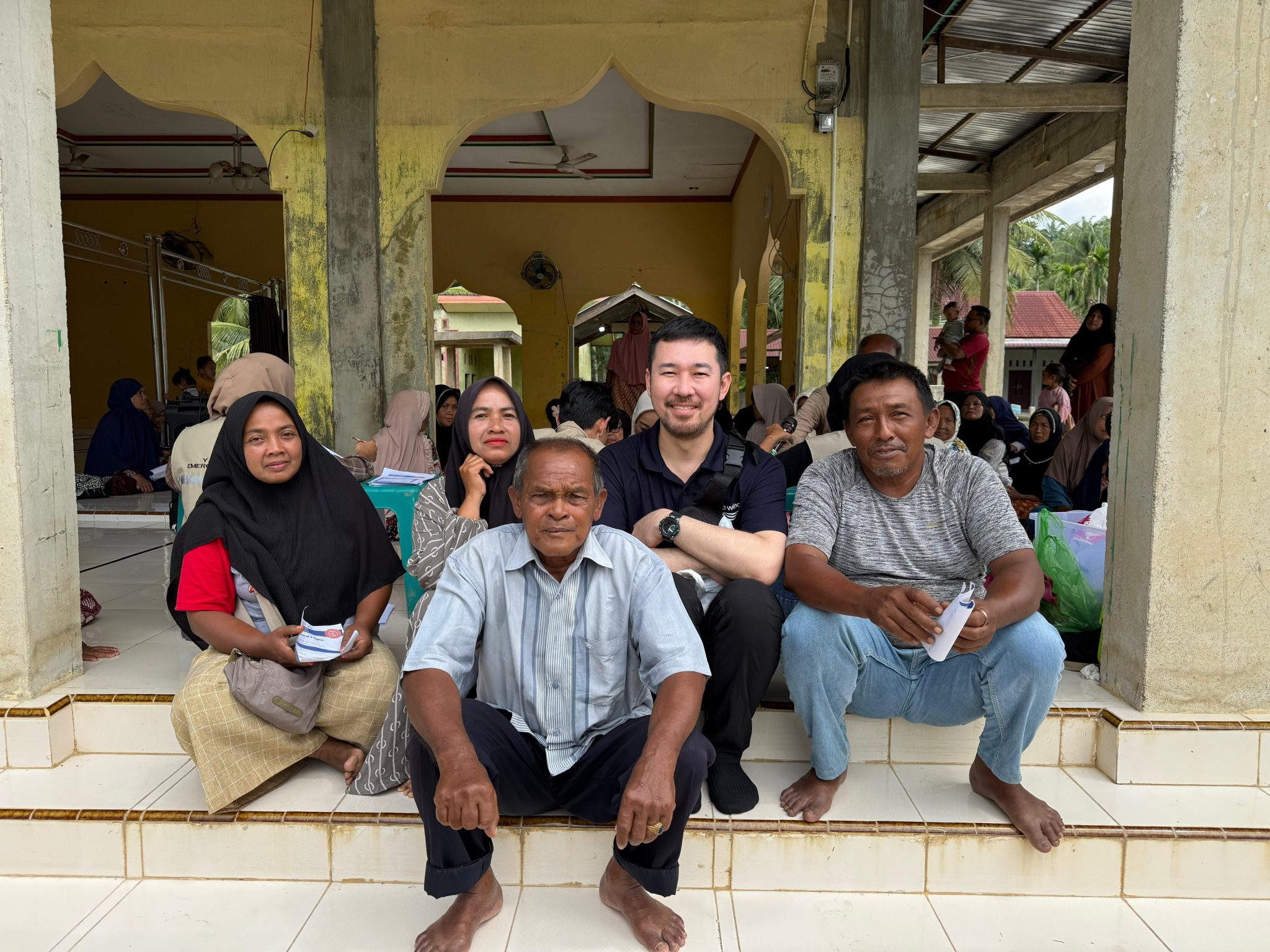
Under the scorching sun in a village in Bireuen Regency, rows of water gallons are neatly arranged on a blue tarpaulin. Residents stand in groups—some waiting for their turn, others helping to lift the heavy loads. Amid the activity, a man in a dark polo shirt is seen interacting directly with the villagers, ensuring the distribution process runs smoothly. He is Shoji, a representative from Peace Winds Japan (PWJ), present to accompany and monitor the implementation of the aid distribution program by YEU in collaboration with Peace Winds Japan, funded by Japan Platform.
Shoji's presence in Aceh is part of an effort to ensure that the humanitarian response provided to communities affected by the flash floods at the end of 2025 is carried out in an accountable, transparent, and well-targeted manner. Bireuen Regency is one of the priority areas, where the basic needs of the community are still in the recovery phase.
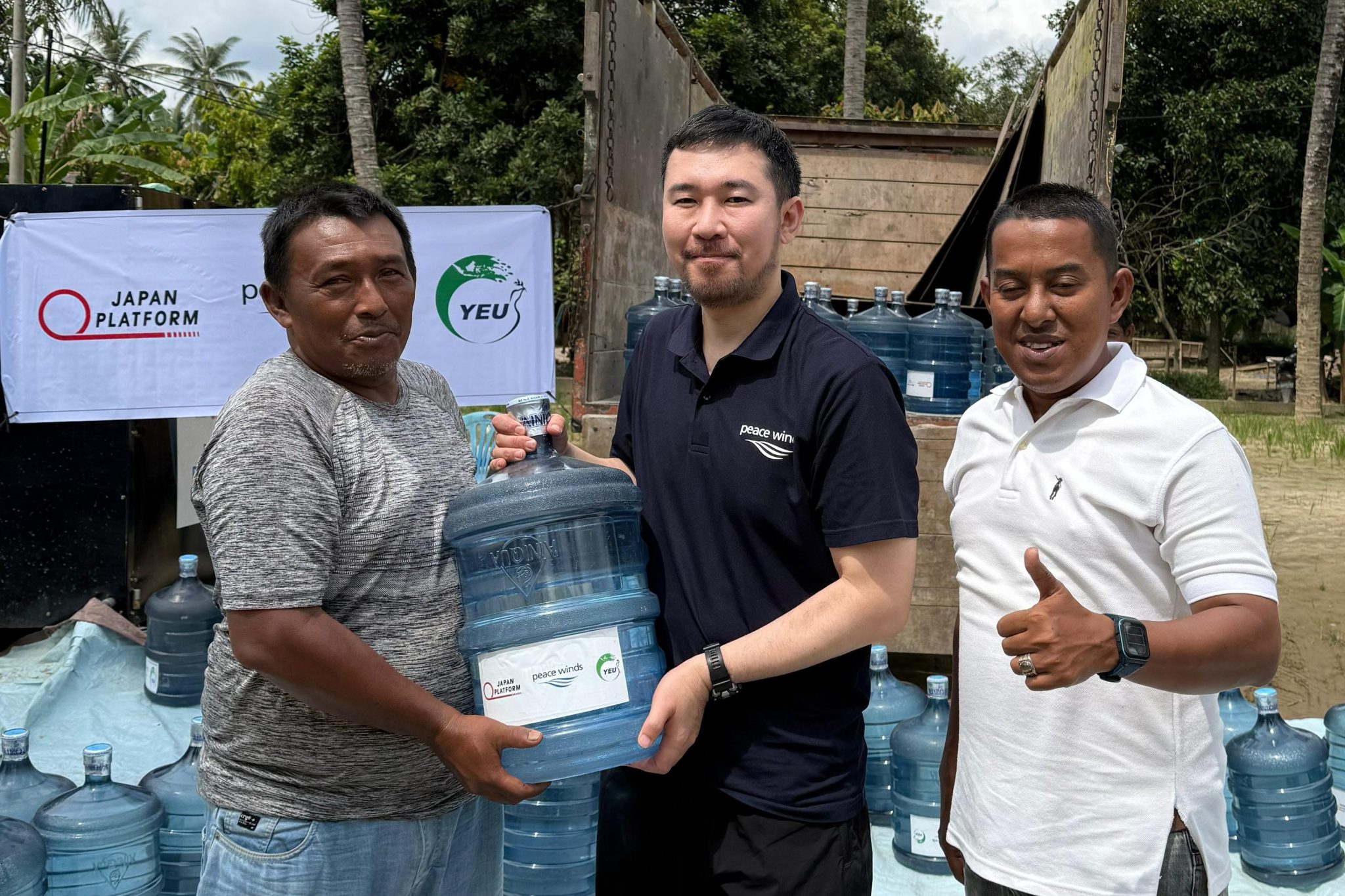
Shoji (center) hands over clean water assistance to a resident during a distribution activity in Bireuen.
However, the approach taken goes beyond mere monitoring. Shoji is directly involved in the distribution process—from assisting with logistics and packaging at the warehouse to supporting implementation in the field. This level of involvement enables real-time verification while ensuring that the aid delivered meets the required standards.
The presence of a donor representative in the field also contributes to increased transparency in the distribution process. Queue mechanisms become more organized, distribution flows are clearer, and information related to the aid is openly accessible to the community. This helps build trust between project participants and implementers.
In addition, direct interaction with the community creates space for faster and more responsive participant feedback. Questions, suggestions, and complaints from the community can be promptly identified and followed up on by the field team. This approach not only improves service quality but also ensures that the program remains adaptive to the community's actual needs.
Communication becomes one of the key strengths of this approach. Shoji interacts with various stakeholders, from village officials to the community, using both English and Malay. This ability facilitates the flow of information and helps build more equal and respectful relationships between the donor, implementers, and the community.
For example, in Pante Baro Kumbang Village, Keuchik (village head) Marwan directly expressed that the village urgently needed heavy equipment to clean houses still covered in mud left by the flash floods. In response, PWJ, through Shoji, promptly provided assistance not only to the village but also to six surrounding villages in Peusangan Siblah Kreung district.
In his reflection, Shoji shared that his experience in Japan, a country that frequently faces disasters, has been a key motivation for his involvement in humanitarian work. He also expressed appreciation for the orderly distribution process in Bireuen, as well as the resilience of the community in the post-disaster situation. This demonstrates that humanitarian work is not only about what is delivered, but also about how the process is carried out.