
Objectives and Agenda
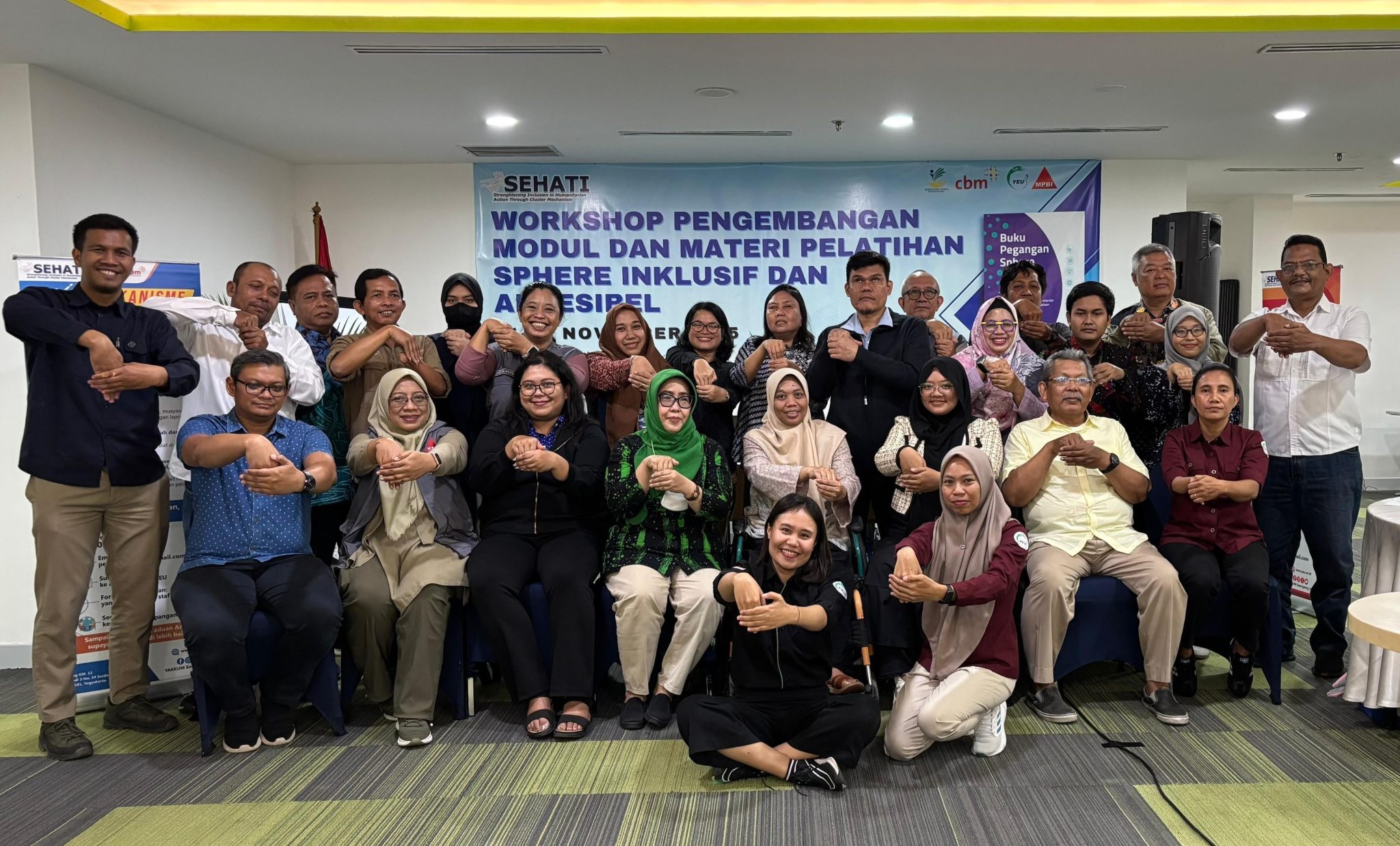
The SEHATI (Strengthening Inclusion in Humanitarian Action Through Cluster Mechanism) Project, a collaboration between the Indonesian Society for Disaster Management (MPBI) and YAKKUM Emergency Unit (YEU), with support from CBM Global, organized an Inclusive and Accessible Sphere Training Module and Material Development Workshop in Jakarta on 11–12 November 2025. The workshop aimed to refine the Sphere training module curriculum to ensure accessibility for people with different types of disabilities and to promote the meaningful participation of Organizations of Persons with Disabilities (OPDs) in the module development process.
The first day of the workshop began with an official opening session, including a keynote address by the Chairman of MPBI, Dr. Avianto Amri. In his remarks, he emphasized the importance of involving persons with disabilities at every stage of humanitarian module development to ensure true inclusivity and accessibility for all. He also shared recent updates on disability inclusion policies at the National Disaster Management Agency (BNPB), including the development of a new roadmap and the strengthening of the role of Disability Service Units (ULD) and disability volunteers, such as Difagana under the Ministry of Social Affairs. Following the opening session, participants received an introduction to the Sphere Structure and the Humanitarian Inclusion Standards (HIS), before proceeding to group discussions. During these sessions, participants reviewed Modules 1 to 4, covering the Sphere Handbook, humanitarian standards, disability inclusion, the Humanitarian Charter, and the Protection Principles. A wide range of feedback emerged, including the need to simplify technical terminology, adapt materials to meet the needs of different disability groups, improve digital formats to be compatible with screen readers, and apply more interactive learning methods.
On the second day, discussions continued with advanced modules covering the Core Humanitarian Standard, Water, Sanitation, and Hygiene (WASH), Food Security and Nutrition, Shelter and Settlements, Health, as well as program cycle management, assessments, and MEAL (Monitoring, Evaluation, Accountability, and Learning). Participants also discussed critical topics related to Protection from Sexual Exploitation and Abuse (PSEA) and coordination within the Sphere framework.
Direct Input from Diverse Disability Groups
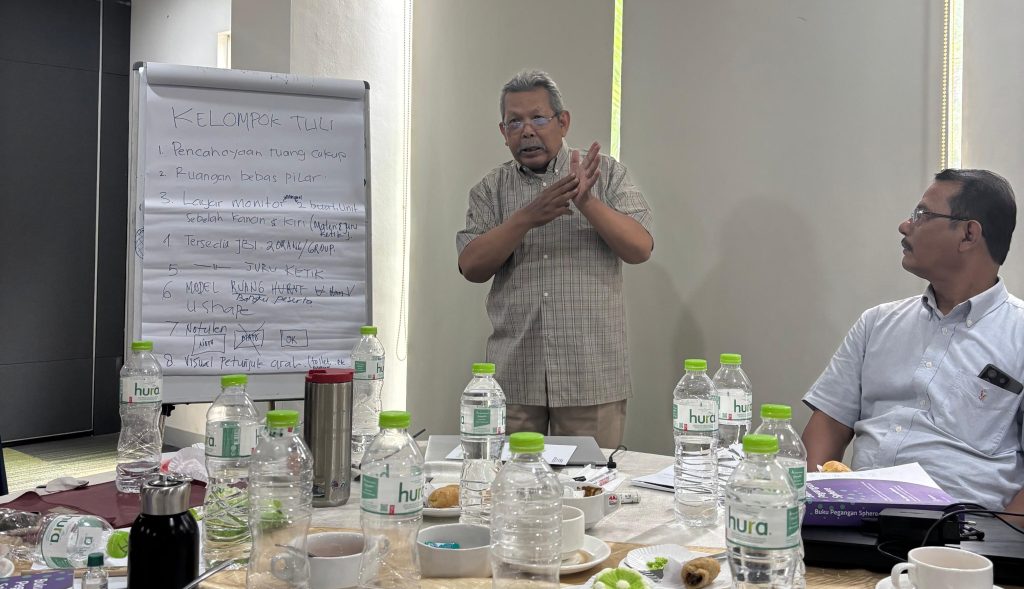
One of the most important sessions of the workshop featured direct presentations on accessibility needs from representatives of Organizations of Persons with Disabilities (OPDs). From the perspective of persons who are deaf or hard of hearing, participants emphasized the importance of adequate lighting and obstruction-free spaces—such as rooms without pillars—to ensure effective communication. They also recommended using at least two screens to display presentation materials and live transcription, providing two sign language interpreters who rotate every 15 minutes, arranging seating in a U-shape, and installing clear visual signage throughout the training venue.
Meanwhile, representatives of persons with visual impairments highlighted the need for more interactive learning approaches, such as stating names before speaking to help participants follow discussions. They also suggested incorporating tactile learning methods through touchable materials, distributing materials in advance of the training, strengthening audio-based content, and reducing reliance on visual materials. Environmental orientation at the start of activities and the availability of trained assistants were also considered essential to ensure participant comfort and safety.
From the perspective of persons with psychosocial disabilities, participants stressed that activities such as ice-breaking sessions should be voluntary and accompanied by trigger warnings for sensitive topics. They also recommended adjusting session durations to avoid being overly long, providing quiet spaces for participants who need them, and allowing flexibility for participants to leave the room at any time without having to seek permission. In addition, collecting information on specific accessibility needs during the registration process was seen as helpful in enabling organizers to prepare appropriate support.
The discussion also highlighted the importance of offering alternative evaluation methods to make training assessments more inclusive, particularly for participants with psychosocial barriers, ensuring that everyone can engage fully in the learning process.
Workshop Outcomes and Impact
Accessibility of learning materials was another key topic discussed during the workshop. One notable issue was the use of Braille for participants with visual impairments. While screen reader technologies continue to advance, OPD representatives emphasized that Braille remains essential for some participants. The group agreed on the importance of asking about accessibility needs in advance so that training materials can be prepared accordingly.
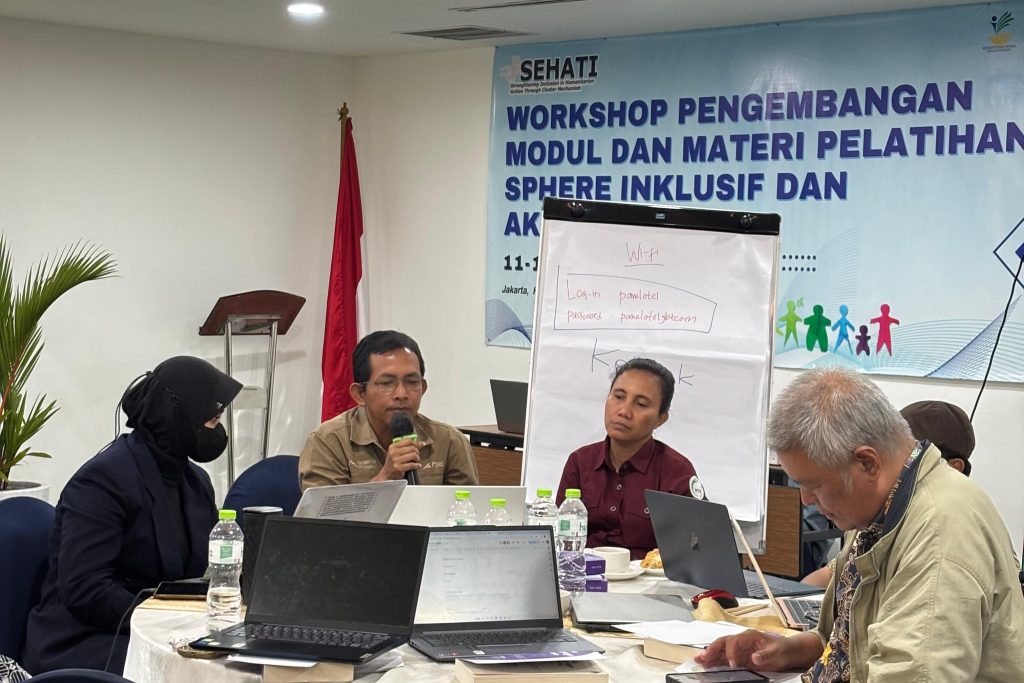
The workshop resulted in the development of more inclusive and accessible Sphere training modules and materials for all participants. OPDs were actively involved throughout the development process and collectively agreed on training formats that accommodate diverse disabilities. Through collaboration among MPBI, YEU, CBM Global, government institutions, OPDs, and humanitarian actors, the workshop reinforced that inclusion must be implemented in practice—not merely discussed as a concept. It is hoped that the resulting modules will support volunteers and humanitarian workers in delivering assistance that is equitable and leaves no one behind.