
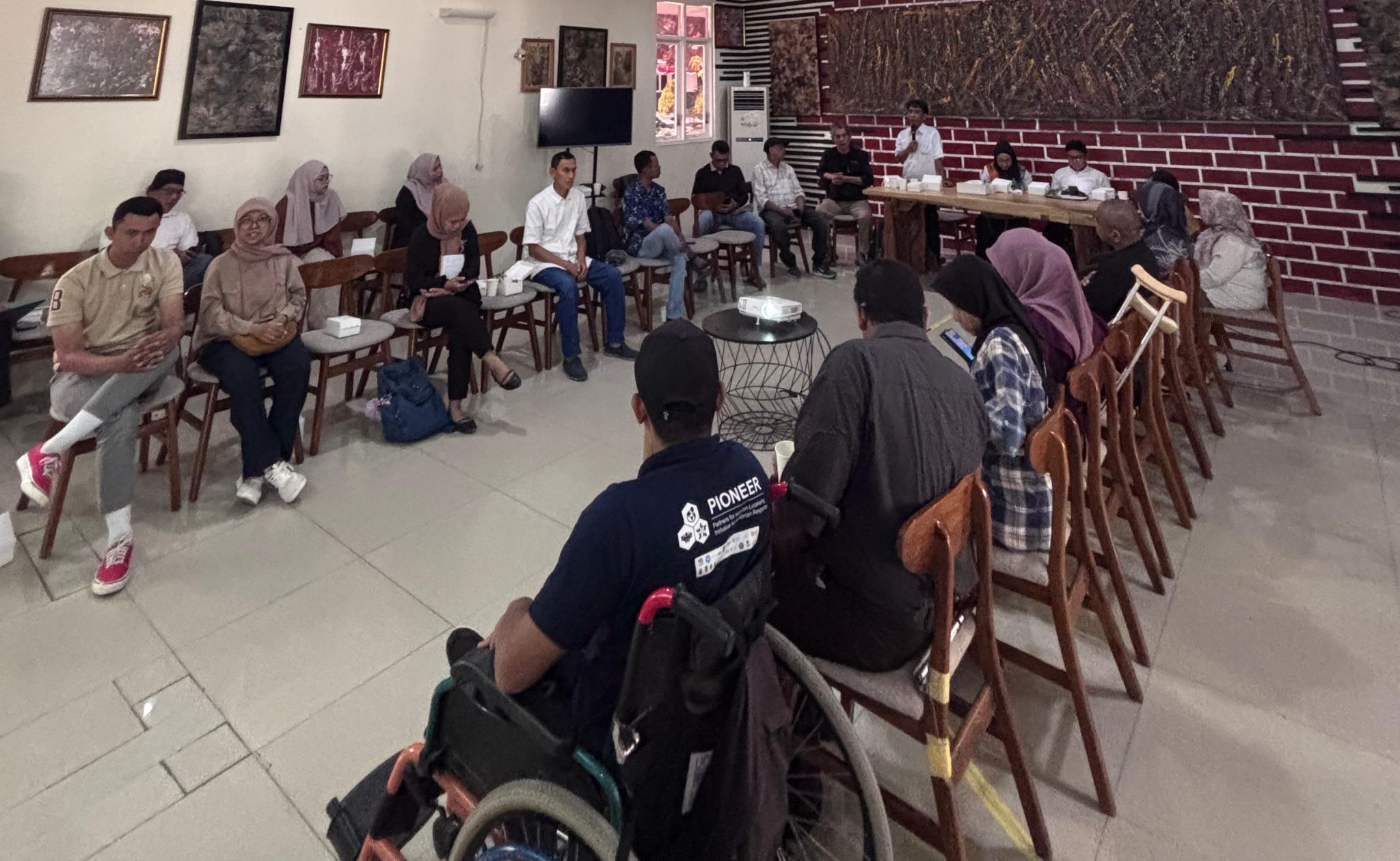
Imagine a disaster striking without warning. Amidst the panic and evacuation process, there are groups in the community who require extra attention: the older people who may have difficulty moving quickly, people with disabilities who require special assistance, and other at-risk groups who are vulnerable to being overlooked. This is where the LDR Subcluster plays a crucial role, and the YAKKUM Emergency Unit is one of the supporting elements.
What is the LDR Subcluster?
The LDR Subcluster is a humanitarian service coordination space in disaster management that specifically focuses on at-risk groups, namely the older people, people with disabilities, and other at-risk groups. LDR itself is an acronym for Older People, Disability, and Other Vulnerable. However, as the principle of inclusion has evolved, the word "vulnerable" has been changed to "other at-risk groups," although the term "vulnerable" remains in use by law.
Why does it exist?
It all started with Law No. 24 of 2007 concerning Disaster Management, which stipulates that disaster management must be carried out in a planned, integrated, coordinated, and comprehensive manner. The goal is clear: to shift the paradigm of disaster management from a reactive approach to an anticipatory and mitigating approach, prioritizing prevention over simply responding after a disaster occurs.
This law also emphasizes shared responsibility between the central and regional governments, involving various stakeholders, including the public, media, academics, and the business world. This process encompasses three major stages: pre-disaster, emergency response, and post-disaster.
To achieve this effective coordination, Indonesia implemented a cluster system or approach in disaster management, a multi-stakeholder collaboration mechanism designed to increase the effectiveness and efficiency of disaster management. From this system, the LDR Subcluster was born, one of eight subclusters within the National Cluster for Displacement and Protection (Klasnas PP). Its existence was established through the 2022 Cluster for Displacement and Protection Guidelines issued by the Ministry of Social Affairs.
Who can join?
Embracing the principle of inclusion, the LDR Subcluster is open to anyone, including individuals, groups, organizations, or institutions, who care about the issues of the older people, people with disabilities, and other at-risk groups. There are no exclusionary boundaries; anyone who cares can contribute.
What is its purpose?
There are four main objectives to be achieved through the LDR Subcluster:
1. Encourage more effective information and coordination mechanisms between the Ministry of Social Affairs and members of the LDR Subcluster at every stage of disaster management, both pre-disaster, emergency response, and post-disaster.
2. Encourage collaboration and cooperation between equal and mutually respectful parties, as a shared commitment to ensure that disaster management is planned, integrated, coordinated, and comprehensive.
3. Opening up capacity building opportunities for the older people, disabilities, and other at-risk groups.
4. Ensuring that the specific needs of this group are met, and that their rights remain protected during and after a disaster occurs.
What is its role?
The LDR Subcluster's role encompasses the entire disaster cycle, from pre-disaster, emergency preparedness, emergency response, and post-disaster phases. In each of these phases, the LDR Subcluster plays a significant role in gathering and coordinating information on preparedness and the efforts undertaken by at-risk groups in each stage of disaster management.
With the existence of the LDR Subcluster, it is hoped that no more groups will be left behind in disaster management, because everyone, including the most at-risk groups, has the right to receive equal protection and attention.