
On a dirt road cutting through Pante Baro Bukit Panyang Village, the soft hum of a motorcycle blends with the light laughter of a community not entirely subdued by the disaster. On a simple wooden cart, several water gallons are neatly stacked—heavy, yet full of meaning. A mother, wearing flip-flops and a warm smile, sits beside the cart, while a small child grips its edge tightly, as if maintaining balance on a road that has yet to fully recover.
The flash floods that struck Aceh left deep scars on both the community and the environment in Pante Baro Bukit Panyang Village. Homes were swept away by the current and buried under thick mud, leaving behind debris and memories that could not be saved. Even sanitation facilities, an essential part of daily life, were lost and carried away by the force of the flood. Clean water, which used to be easily accessible, has now become scarce, forcing the community to struggle just to meet their most basic daily needs.
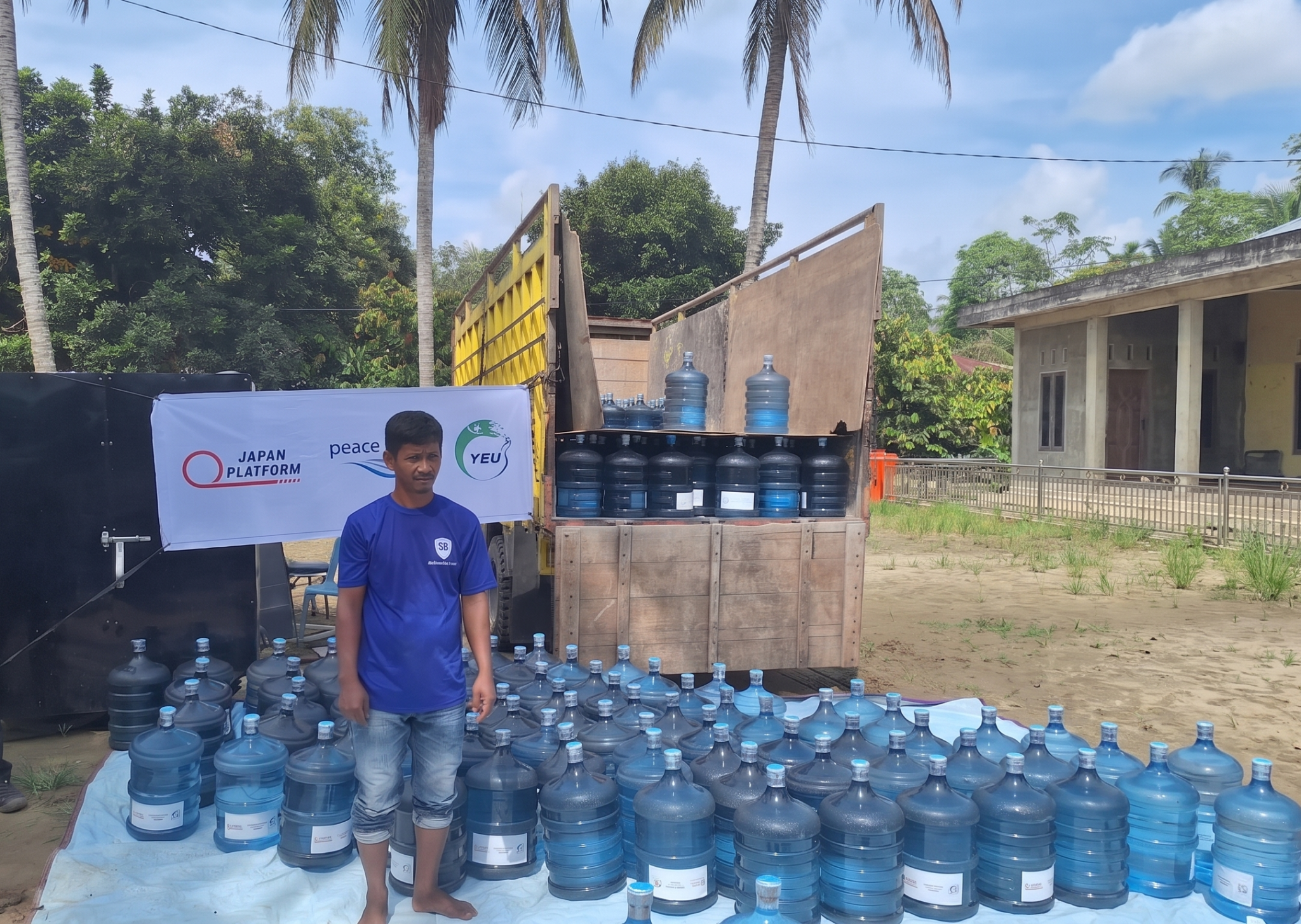
However, amid these limitations, there is a scene just as powerful as the impact of the disaster: solidarity. Beneath the shade of coconut trees and a sky beginning to clear, men work side by side unloading water from the back of a truck. Without many words, they move in the same rhythm—lifting, arranging, and passing them on to others.
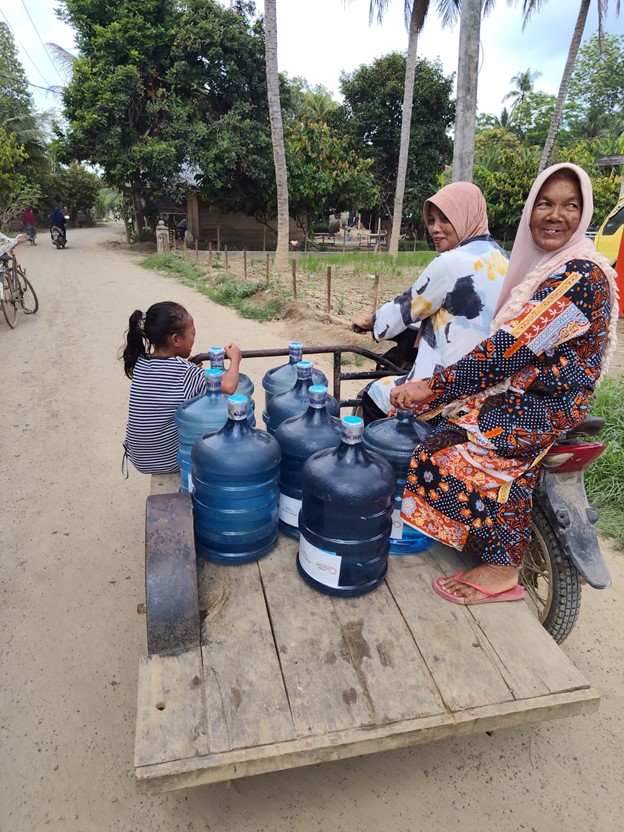
In another corner, women heading their households also take on their roles. With steady steps, they carry water gallons to their homes, ensuring their families’ basic needs are met. No complaints are heard, only occasional bursts of laughter—light, yet strengthening.
The provision of communal cleaning tools and two gallons of water for each family may seem simple. However, for the community of Pante Baro Bukit Panyang Village, this marks an initial step toward a more structured recovery. More stable access to water helps meet daily needs, while the availability of cleaning supplies supports hygienic practices, including reducing the risk of diseases such as diarrhea and respiratory infections.
The hopes of the community are simple, that they will not return to practices that pose risks to their health. Yet now, that hope is also supported by a growing collective awareness—that maintaining environmental hygiene is an essential part of recovering together.
In this village, water is not merely carried in large gallons. It has become part of the community’s effort to rebuild their lives—slowly but surely, from meeting the most basic needs to nurturing hopes for a healthier future.