
What is the first thing that comes to mind when you hear the term climate change? Back in school, many of us were introduced to images of melting glaciers and polar ice caps as the defining impacts. Yet today, climate change feels much closer and is increasingly shaping our daily lives. We see it in failed harvests, more extreme and unpredictable weather, and dwindling clean water sources.
A clear example around us is the shifting rambutan harvest season, caused by the phenomenon known as a “wet dry season,” which disrupts the flowering process. This shows how climate change is altering natural patterns, raising disaster risks while also threatening livelihoods and food security.
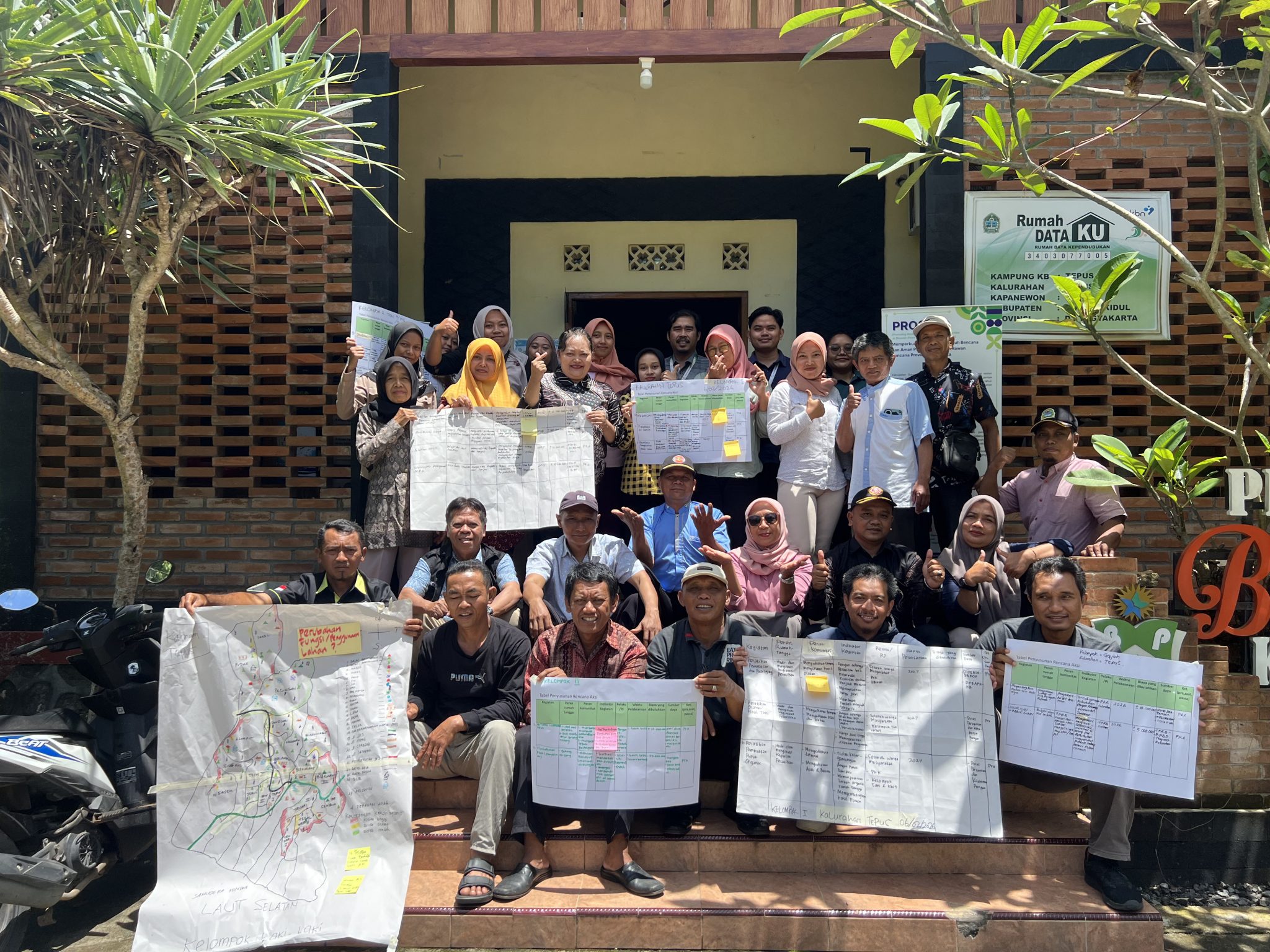
To strengthen food security and community resilience to disasters, YEU, in collaboration with the Yogyakarta Special Region Disaster Risk Reduction Forum (FPRB DIY), organized a series of Participatory Assessment on Climate & Disaster Resilience Workshop from February 2–24, 2026. The workshops were held in seven villages across Kulon Progo (Kalirejo, Hargotirto, Kebonharjo, and Banjarsari) and Gunungkidul (Tepus, Kanigoro, and Banjarejo), each running for five days.
A total of 232 participants took part in the process, including 100 women, 16 persons with disabilities, and 13 older people. Participants represented farmer groups, women’s groups (such as PKK, MSMEs, and KWT), people with disabilities, and village governments. The workshops created a space for communities to collectively explore risks, vulnerabilities, capacities, and local strategies for dealing with climate and disaster risks.
The process also involved the BPBD (Disaster Management Agency at the sub-national level) of Kulon Progo and Gunungkidul, as well as BMKG of Yogyakarta (Meteorology, Climatology, and Geophysical Agency), which played an important role in sharing information on disaster risks and future weather and climate forecasts. Their role is becoming increasingly critical as traditional local forecasting methods, such as pranata mangsa,are no longer sufficient to capture today’s climate anomalies.
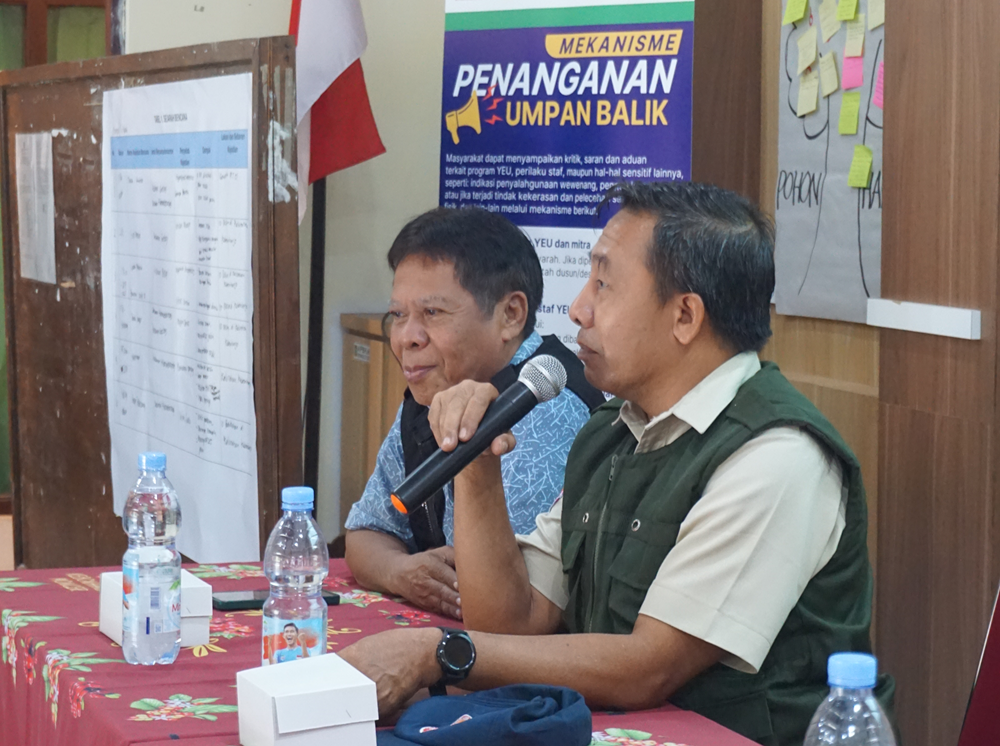
[Photo by Devi/YEU – BPBD Kulon Progo presenting disaster risk information].
During the workshops, participants were divided into groups based on gender. This approach ensured more meaningful participation while also capturing different perspectives and experiences in dealing with climate and disaster impacts. As a result, the action plans developed are expected to better address gender-specific needs without reinforcing existing inequalities.
The first activity involved collectively tracing past disaster events, understanding their characteristics, and identifying priority hazards. Despite differences in geological landscapes between Kulon Progo and Gunungkidul, all villages identified drought as a top priority risk.
Communities then developed seasonal calendars to map the frequency, intensity, and shifts in key events throughout the year, comparing current conditions with those from 20 years ago. They also worked together to create hazard maps, not only identifying risk locations but also mapping agricultural assets, water sources, and the residences of at-risk groups.
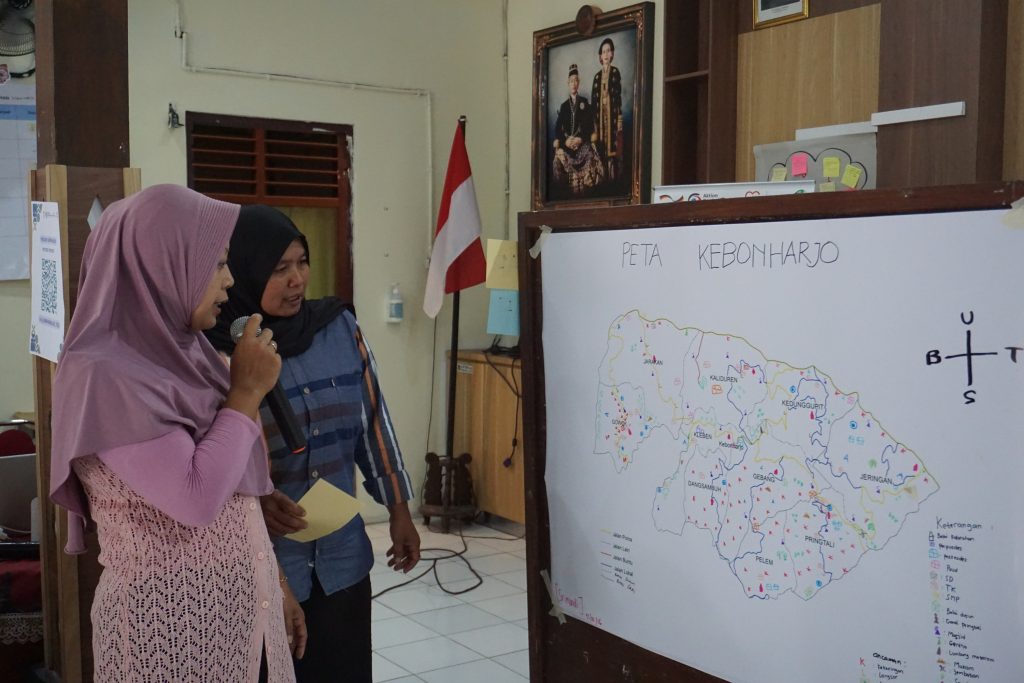
[Photo by Devi/YEU – Women’s group presenting a hazard map in Kebonharjo Village].
Participants also assessed community livelihood capacities and vulnerabilities, exploring how disasters affect five key livelihood assets: infrastructure, economy, social, environment, and human resources. Based on these findings, community members collaboratively developed potential action plans for disaster risk reduction (DRR) and climate change adaptation.
Interestingly, although drought has long been a recurring event, participants in several villages previously saw it as a normal occurrence rather than a serious threat. This perception shifted after in-depth discussions and calculations of disaster impacts on the five livelihood assets. Participants came to realize that the losses are far-reaching, ranging from damaged infrastructure such as homes and roads, to reduced agricultural yields and water availability and even risks of injury and loss of life. This new awareness has led communities to recognize drought as a priority threat that requires immediate attention.
These workshops not only highlight how climate change impacts are becoming more immediate and tangible but also demonstrate the capacity of communities to collaborate, identify risks, and develop context-specific solutions. Through participatory processes like these, communities are strengthening both food security and resilience to disasters and climate change.
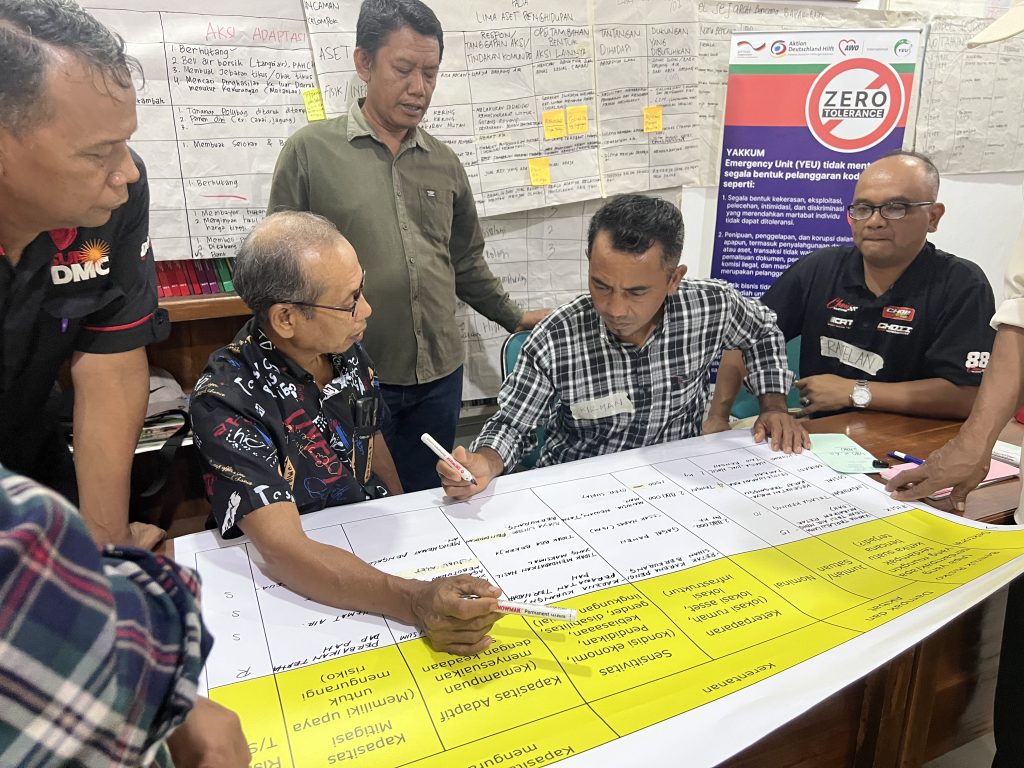
[Photo by Duma/YEU – Men’s group in Tepus Village analyzing vulnerabilities, capacities, and climate mitigation and adaptation actions].
This workshop is part of the PROSPER project implementation. The project, titled “PROSPER: Promoting Resilient and Food-Secure Communities in Disaster-Prone Areas of Yogyakarta Province” is implemented by YAKKUM Emergency Unit (YEU), with support from AWO International and funding from the German Federal Ministry for Economic Cooperation and Development (BMZ) and the German Relief Coalition (ADH).
Written by: Devi Lailatul Fitri Anggraini (Communication, Information, and Secretariat Staff of YEU)
Edited by: Duma Hardiana Manurung (Community Organizer Staff of YEU)