
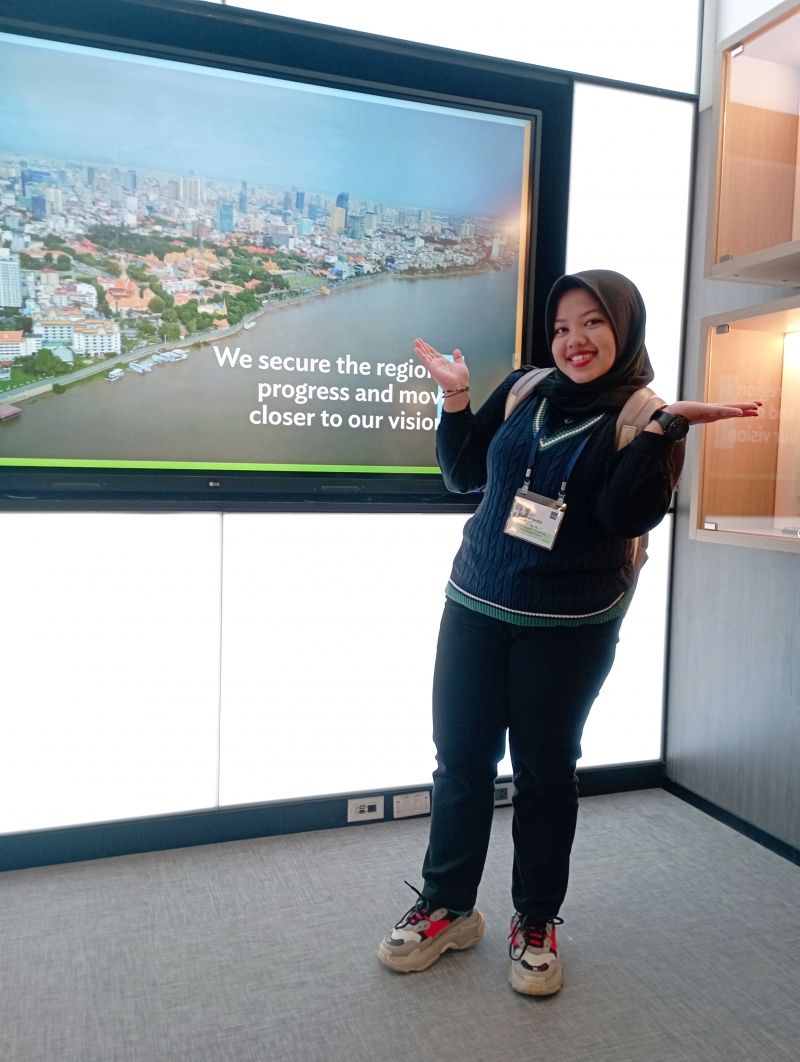
On 15-17 September 2025, I had the invaluable opportunity to speak at CSO Session 3: Community-led Innovation – Cost-effective and Sustainable Solutions for Resilience, Empowerment and Climate Action at the Triple Nexus+ as part of the ADB CSO Insights & Business Opportunities Fair in Manila, Philippines.

Accompanied by Mrs Agnes Meiria, YEU Programme Manager, I shared the experiences of the Karang Taruna Prima Gadung youth organisation in managing local resources, building cross-generational collaboration, and strengthening the role of young people in climate adaptation. The lesson I shared was that community-based innovation does not have to be expensive, but it must be relevant to the needs of the community and sustainable.
Lessons from the Forum

During the forum, I not only shared local stories, but also learned a lot from various sessions. For example, in the Opening Plenary Session, successful development is determined by community involvement from the planning stage, as well as the principles of accountability and transparency. In the Environmental and Social Framework (ESF), it was emphasised that all development must take into account sustainability, respect community rights, and provide space for indigenous and vulnerable groups. In the Parallel Session on Just Transition, it was revealed that a just energy transition is not only about replacing energy sources, but also about redressing social injustices. Another session that I reflected on, Leveraging Civil Society Innovation to Address the Triple Planetary Crisis, discussed how nature-based solutions can address the climate crisis, pollution, and biodiversity loss, while strengthening the local economy and the role of women. Finally, I also attended the Roundtable on SDGs, where civil society organisations have a dual role as both implementers and overseers of development.
Discussions with another local actor from the Philippines, Zenith, also showed that despite differences in national contexts, there is a common thread: community challenges can only be addressed with solutions that grow from within the community itself.
Personal Reflection

For me, this experience was a valuable opportunity to showcase the innovations of rural youth on the international stage. I also learned that the voices of local communities can contribute to the global discourse on sustainable development. In addition, I brought home new inspiration from the practices of other communities that can enrich our innovations in Nganjir.
This experience also reinforced my belief that young people are agents of change who can bridge local needs with the global agenda. With the right support, simple innovations from villages can become part of the global solution to climate crises and disasters.
—–
Written by: Isti Winarni
Edited and rewritten by: Desy Putri Ratnasari